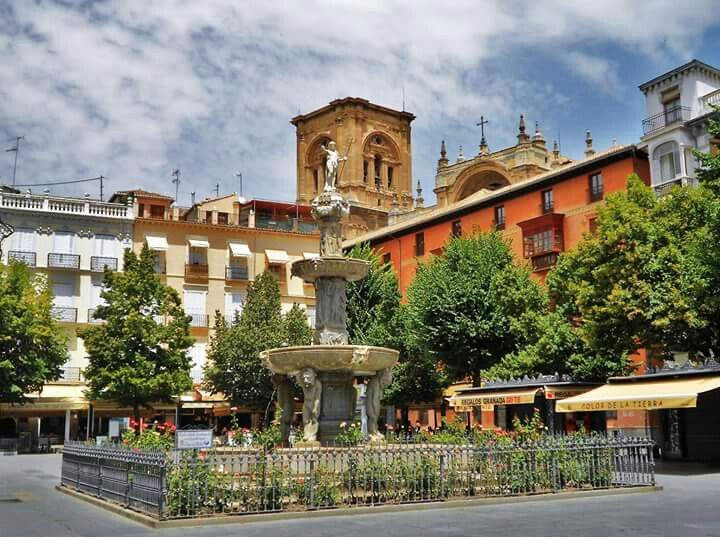
DROP&WALK JOURNAL · GRANADA Where to Have Breakfast in Central Granada: 5 Great Places to Start the Day Traditional churros, specialty coffee and relaxed brunch spots within walking distance of Plaza Bib-Rambla and Granada Cathedral. Finding breakfast in Granada is easy. Choosing the right place is harder when you are staying in the historic centre and have dozens of cafés around Plaza Bib-Rambla, the Cathedral, Calle Mesones and Gran Vía. This is not meant to be a definitive ranking of the “five best breakfasts in Granada”. Instead, we have picked five places for five slightly different mornings: a traditional café in one of the city's best-known squares, specialty coffee for people who take their first cup seriously, and a relaxed brunch when there is no reason to rush. They are particularly convenient if you are staying in central Granada, arriving before check-in or simply want to start sightseeing without crossing half the city first. Five breakfasts, five ways to start Granada Coffee and churros in a busy square, a carefully made espresso or a long brunch before a day on foot — central Granada makes all three easy. 01 · A GRANADA CLASSIC Gran Café Bib-Rambla If you want to begin the morning in one of central Granada's most recognisable spots, Plaza Bib-Rambla is difficult to beat. Gran Café Bib-Rambla sits directly on the square, a few steps from the Cathedral and the Alcaicería. Part of the pleasure is simply taking a seat and watching the historic centre wake up around you. It works especially well for a traditional breakfast with coffee and toast, or for anyone who considers being on holiday a perfectly good reason to order churros in the morning. Best for: first-time visitors and a classic Granada start. 📍 Open in Google Maps 02 · SPECIALTY COFFEE Despiertoo Gran Vía For some travellers, breakfast begins with one very important question: where can I get genuinely good coffee? Despiertoo Gran Vía is at Gran Vía de Colón 7 and combines specialty coffee with breakfast, brunch, cakes, cookies and pastries. The location is particularly useful for travellers. Once you finish, the Cathedral and Plaza Nueva are an easy walk away, and you can continue towards the Albaicín from there. Best for: specialty coffee lovers. 📍 Open in Google Maps 03 · FOR A SLOWER BRUNCH GIGI Some mornings only need coffee and toast. Others are better when breakfast becomes the first proper stop of the day. GIGI is at Calle Mesones 50, right in central Granada and only a few minutes' walk from the Cathedral. Its menu is built around brunch and more substantial breakfast options, making it a good choice when there is no reason to rush. Best for: an unhurried morning and a proper brunch. 📍 Open in Google Maps 04 · WHEN COFFEE COMES FIRST La Finca Coffee La Finca Coffee is a strong choice when the coffee itself matters more than having a huge breakfast. Located at C. Colegio Catalino 3, close to the Cathedral, La Finca combines a central coffee shop with its work as a specialty micro-roaster. It is well suited to an espresso, filter coffee and something light before heading straight back out into the city. Best for: espresso, filter coffee and a lighter breakfast. 📍 Open in Google Maps 05 · RIGHT BY THE CATHEDRAL SEDA COFFEE Some breakfast spots almost plan the rest of the morning for you. SEDA COFFEE is at Plaza de las Pasiegas 3, practically on the doorstep of Granada Cathedral. From here the route almost writes itself: coffee, Cathedral, Royal Chapel, Alcaicería and Plaza Bib-Rambla. Best for: good coffee followed immediately by sightseeing. 📍 Open in Google Maps What should you have for breakfast in Granada? There is no need to make it complicated. Toasted bread with tomato and extra virgin olive oil is still one of the simplest and most satisfying ways to start the morning in Spain. Add jamón if you like, order a café con leche and orange juice, or take advantage of being on holiday and go for churros with hot chocolate instead. Granada also has a lively specialty coffee scene, so anyone looking for espresso, filter coffee or different origins will find more choice than they might expect. After breakfast: an easy walk through central Granada One of the biggest advantages of having breakfast around Plaza Bib-Rambla is that the historic centre effectively starts as soon as you leave the café. Plaza Bib-Rambla → Alcaicería → Cathedral → Royal Chapel → Plaza Nueva → Carrera del Darro If you still have time and energy, continue from Plaza Nueva towards the Albaicín and one of its viewpoints. Arriving in Granada before check-in? Dragging a suitcase through the historic centre is a quick way to make a good morning considerably less enjoyable. If you arrive before your hotel or apartment is ready, you can store your luggage first and start exploring with your hands free. DROP&WALK Locker Granada is at C. Montereros, 3, Centro, 18002 Granada , just a short walk from Plaza Bib-Rambla and Granada Cathedral. The plan is simple: leave the bags, go for breakfast and start enjoying Granada straight away. A DROP&WALK JOURNAL READER BENEFIT Explore Granada without carrying your luggage When booking DROP&WALK Locker Granada , use the promotional code: GRANADA10 Leave your bags, enjoy breakfast and start exploring the city hands-free. Book your locker in Granada → So, where should you have breakfast in Granada? For a traditional start: Gran Café Bib-Rambla. If coffee matters most: Despiertoo or La Finca Coffee. For a proper brunch: GIGI. For coffee right beside the Cathedral: SEDA COFFEE. The best part is that none of these places requires a major detour. You can have breakfast, step outside and simply start exploring Granada on foot.
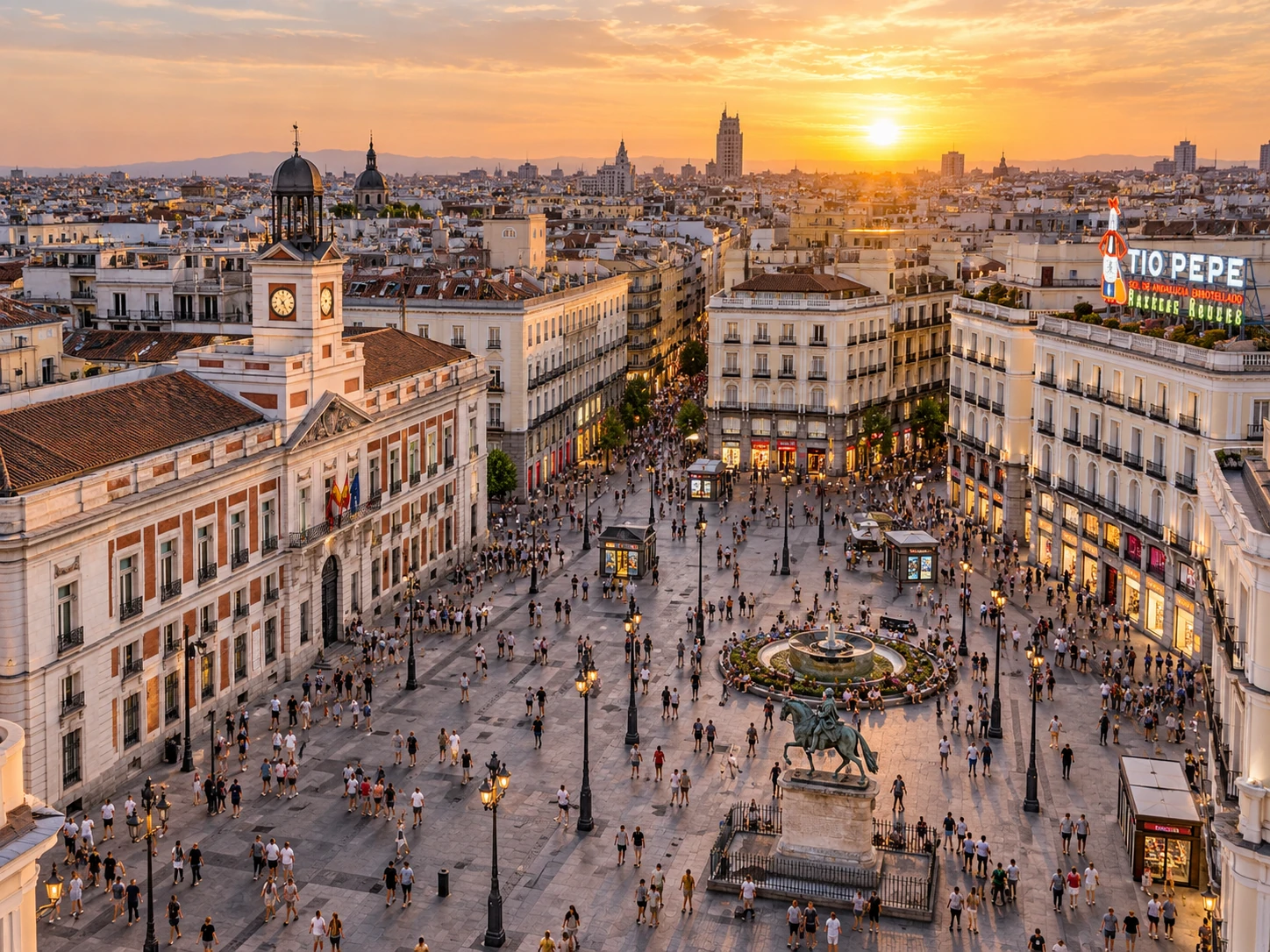
If you are standing in Puerta del Sol , you are already in one of the best places to start exploring Madrid on foot. Within a few minutes, you can move from some of the city centre’s most famous squares into the narrow streets of Habsburg Madrid, reach the Royal Palace and finish among the bright façades of Gran Vía. This route is designed to be enjoyed without rushing and without relying on public transport. It works particularly well if you have just arrived in Madrid before check-in, have already checked out of your hotel or simply have a few free hours and want to make the most of them on foot. This is not a checklist of monuments to race through. Think of it instead as a walk through several versions of Madrid: the historic city, the monumental capital and the more energetic modern centre — all within walking distance of Sol. DROP&WALK JOURNAL · MADRID What to See Near Puerta del Sol: A Walking Route Through Central Madrid Plaza Mayor, Mercado de San Miguel, Habsburg Madrid, the Royal Palace, Plaza de Oriente and Gran Vía — all on one easy route that can be explored entirely on foot. Puerta del Sol is one of the easiest places from which to start exploring central Madrid on foot. The full route forms a convenient loop. It starts at Sol, heads towards historic Madrid and the Royal Palace, then returns through Arenal, Callao and Gran Vía. You can follow the whole route or shorten it depending on how much time you have. THE ROUTE AT A GLANCE Route: Sol → Plaza Mayor → San Miguel → Plaza de la Villa → Almudena → Royal Palace → Plaza de Oriente → Callao → Gran Vía → Sol Distance: approximately 3–3.5 km Time: around 2.5–3.5 hours with stops Transport: none required Best for: first-time visitors, a city stopover or a few spare hours before check-in or after check-out 01 · PUERTA DEL SOL Start at Kilometre Zero There is no need to rush away from Sol. Before setting off, take a few minutes to look around — several of Madrid’s most recognisable symbols are concentrated right here. In front of the Real Casa de Correos you will find the Kilometre Zero plaque, traditionally used as the starting point for Spain’s radial road network. Nearby are the famous Bear and the Strawberry Tree statue and the equestrian monument to King Charles III. The square is pedestrianised and connects directly with several important central streets, including Calle Mayor, Arenal, Alcalá, Preciados and Carrera de San Jerónimo. That makes Sol a particularly easy place from which to begin exploring central Madrid. Recommended time: 10–15 minutes. From here, follow Calle Mayor towards Plaza Mayor. 02 · PLAZA MAYOR Step into Habsburg Madrid The atmosphere changes within just a few minutes. The constant movement of Sol gives way to a vast enclosed square framed by red façades, balconies, arcades and entrances leading into the surrounding historic streets. Plaza Mayor is one of the great historic settings of central Madrid. The monumental square we see today began to take shape in the early 17th century. Over the centuries it has served as a marketplace, a venue for celebrations and public events, and one of Madrid’s most important gathering places. Today, the experience is much simpler: enter through one of the arches, walk beneath the arcades, look up at the Casa de la Panadería and then continue towards Mercado de San Miguel. Not every stop needs to become a long visit. Part of what makes this route work so well is how easily one landmark leads into the next. 03 · MERCADO DE SAN MIGUEL Stop for Something to Eat — or Simply Have a Look Just a few steps from Plaza Mayor, the iron-and-glass structure of Mercado de San Miguel comes into view. Mercado de San Miguel combines food and architecture just minutes from Puerta del Sol. Today it operates mainly as a gourmet food market, with stalls serving tapas, Iberian ham, cheese, seafood, wine, desserts and contemporary takes on Spanish cuisine. Our suggestion is not to treat it as a compulsory stop. If something catches your eye and there is space, go in. If it is crowded or you are not hungry yet, keep walking. One of the most interesting parts of the route is just ahead. Official Mercado de San Miguel website → 04 · PLAZA DE LA VILLA A Much Older Madrid Than You Might Expect Return to Calle Mayor and continue towards the Royal Palace. Before reaching it, you will come across Plaza de la Villa , one of the best-preserved historic corners of central Madrid. Plaza de la Villa offers a glimpse of medieval Madrid only a short walk from Sol. This was once one of the main centres of medieval Madrid. Several buildings from different periods still surround the square, including Casa y Torre de los Lujanes, Casa de Cisneros and the former Casa de la Villa. After the scale and movement of Sol and Plaza Mayor, the contrast is noticeable. Plaza de la Villa is smaller, quieter and almost automatically makes you slow down. Stay for a few minutes, then continue along Calle Mayor towards Calle de Bailén. 05 · ALMUDENA CATHEDRAL This Is Where Madrid Changes Scale When Calle Mayor reaches Bailén, the streets suddenly open up. The compact lanes of Habsburg Madrid give way to the monumental Cathedral of Santa María la Real de la Almudena . If you are short on time, simply walking around the exterior and reaching the open space between the cathedral and the Royal Palace is enough to appreciate the setting. With more time, you can also visit the cathedral interior, museum or dome. If you plan to go inside, check current opening times and temporary changes beforehand. Official Almudena Cathedral website → 06 · ROYAL PALACE One of Madrid’s Major Landmarks Right beside the cathedral stands the Royal Palace of Madrid . Even if you do not go inside, the Plaza de la Armería and the palace façade make the walk to this side of the city worthwhile. The Royal Palace is one of the most monumental stops on the route. If you want to explore the interior, allow considerably more time. A visit through the main rooms takes around 45 minutes, although entry procedures and security checks mean it is sensible to leave some extra time. Opening times can vary and additional closures may occur for official events, so it is worth checking the latest information before planning your visit. Official information and tickets → 07 · PLAZA DE ORIENTE A Pause Between the Royal Palace and Teatro Real Walk around the palace and you will reach Plaza de Oriente . The atmosphere shifts again: gardens, trees, statues and benches fill the space between the Royal Palace and Teatro Real. Plaza de Oriente is one of the most pleasant places on the route to slow down for a while. If you have already been walking for a couple of hours, this is probably the ideal moment to sit down for five or ten minutes. A good Madrid itinerary should not simply be about reaching the next landmark as quickly as possible. When you are ready, head towards Calle Arenal to begin the return journey to Sol. OPTIONAL DETOUR Churros and Chocolate? San Ginés Is on the Way As you walk back along Calle Arenal, you can make a short detour into Pasadizo de San Ginés, home to one of Madrid’s best-known chocolaterías. It is one of those classic Madrid stops that works best when you actually feel like it. If there is a table available, it can be a welcome break before the final section of the walk. If the queue is huge, keep going without feeling that you have missed some essential Madrid ritual. Up to this point, the route has moved through historic squares, narrow streets and buildings associated with Madrid’s older districts. Within a few minutes, the scenery changes completely again. From Arenal, head towards Callao and you will suddenly find yourself in a Madrid that feels taller, brighter and far more urban. A CHANGE OF SCENE From Habsburg Madrid to Gran Vía In less than ten minutes, palaces and narrow historic streets give way to theatres, monumental façades, shops and the lights of one of Spain’s most famous avenues. 08 · CALLAO AND GRAN VÍA Finish in Madrid’s More Modern City Centre When you reach Callao , another side of Madrid appears. Large screens, theatres, hotels, shops and some of the city’s most recognisable façades replace the smaller squares and historic streets from the beginning of the route. Callao and Gran Vía show a very different, more urban side of central Madrid. There is no need to walk the entire length of Gran Vía. From Callao, walk a short section and take a moment to look along the avenue in both directions. You can then return to Puerta del Sol via Preciados, Carmen or Montera. That final walk completes the loop. What to See Near Puerta del Sol Depending on How Much Time You Have One of the advantages of this route is that you do not need to complete the entire circuit. It can easily be adapted to a spare hour, a free morning or a longer afternoon in central Madrid. IF YOU HAVE 1 HOUR Sol → Plaza Mayor → Mercado de San Miguel This shorter version gives you a feel for the historic centre closest to Puerta del Sol without taking you too far away. IF YOU HAVE 2 HOURS Add Plaza de la Villa, Almudena Cathedral and the Royal Palace Two hours gives you enough time to see a substantial part of historic Madrid and reach the monumental area around Calle de Bailén. IF YOU HAVE 3 HOURS OR MORE Follow the Full Route Sol → Plaza Mayor → San Miguel → Plaza de la Villa → Almudena → Royal Palace → Plaza de Oriente → Callao → Gran Vía → Sol. Where Can You Leave Your Luggage Near Puerta del Sol? This route is considerably more enjoyable without a suitcase rolling behind you. Central Madrid is very walkable, but the route includes cobbled surfaces, pedestrian streets, busy areas and different types of paving. If you arrive before hotel check-in, have already checked out or have a few hours before your train or flight, it makes sense to store your luggage first and start exploring from Sol. DROP&WALK Locker Madrid is located at Calle Espoz y Mina, 32 , right in the city centre and only a short walk from Puerta del Sol. The service is available 24/7, with online booking and self-service access. DROP&WALK MADRID Leave Your Luggage and Start Exploring Address: Calle Espoz y Mina, 32 Area: Puerta del Sol · Central Madrid Access: 24 hours · 7 days a week Locker sizes: M · L · XL Book Luggage Storage in Madrid FAQ · CENTRAL MADRID Frequently Asked Questions What can you see within walking distance of Puerta del Sol? From Puerta del Sol, you can easily walk to Plaza Mayor, Mercado de San Miguel, Plaza de la Villa, Almudena Cathedral, the Royal Palace, Plaza de Oriente, Callao and Gran Vía. How long do you need to explore central Madrid from Sol? With one hour, you can comfortably see Sol, Plaza Mayor and Mercado de San Miguel. With two hours, you can continue as far as the Royal Palace. For the full route at a relaxed pace, allow around two and a half to three and a half hours. Do you need to use the metro? No. The entire route is designed to be walked, with a total distance of approximately 3–3.5 kilometres. Is the route free? Yes. Walking through all the streets and squares included in this route is free. You will only need to pay if you decide to enter attractions, museums or monuments that require a ticket. Where can I leave a suitcase near Puerta del Sol? DROP&WALK Locker Madrid is located at Calle Espoz y Mina, 32, only a short walk from Puerta del Sol. It is open 24/7 and allows you to reserve a locker online. Is this a good route to do after hotel check-out? Yes. Because the route starts and finishes close to Puerta del Sol, it is easy to adapt to the time you have available before heading to the train station or airport. ONE LAST THOUGHT Madrid Makes More Sense on Foot Puerta del Sol does not have to be just another square where you stop for a photograph. It can be the place where you start to notice how Madrid changes from one street to the next. In the space of a few hours, you can walk through a 17th-century square, cross part of medieval Madrid, reach the Royal Palace and finish surrounded by theatres and monumental buildings on Gran Vía. And almost all of it is only a short walk away.
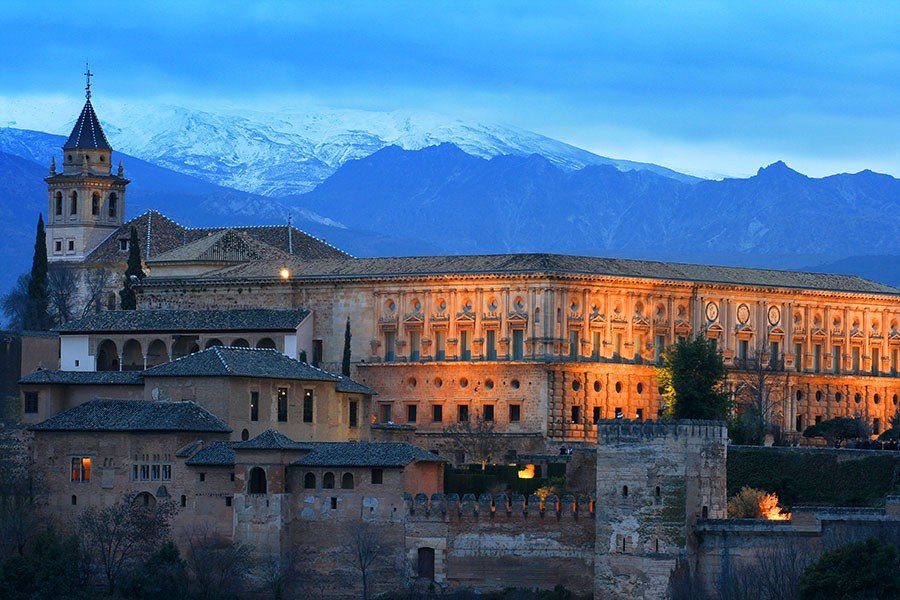
Granada looks compact on a map, but the city moves at a different pace. The Cathedral, Plaza Nueva and Carrera del Darro are relatively close together; then come the hills, the Albaicín's cobbled streets and the climb towards the Alhambra. A rewarding visit is not about squeezing in as many landmarks as possible. It is about grouping places sensibly and leaving time to sit on a terrace, discover a viewpoint or walk into a tapas bar without watching the clock. This guide covers Granada's essential sights, realistic itineraries for 1, 2 or 3 days, practical transport advice and a convenient way to store your luggage in central Granada before check-in or after check-out. .daw-magazine { --daw-ink: #172033; --daw-muted: #667085; --daw-blue: #2457e6; --daw-blue-dark: #153698; --daw-blue-pale: #eef3ff; --daw-sand: #f7f2e9; --daw-gold: #d19a3c; --daw-white: #ffffff; --daw-line: #dfe5ef; max-width: 1120px; margin: 0 auto; color: var(--daw-ink); font-family: Arial, Helvetica, sans-serif; font-size: 17px; line-height: 1.72; } .daw-magazine * { box-sizing: border-box; } .daw-magazine a { color: var(--daw-blue-dark); font-weight: 700; text-decoration-thickness: 1px; text-underline-offset: 3px; } .daw-magazine h2, .daw-magazine h3, .daw-magazine p, .daw-magazine ul, .daw-magazine ol, .daw-magazine blockquote { margin-top: 0; } .daw-magazine h2 { margin: 0 0 24px; color: var(--daw-ink); font-family: Georgia, "Times New Roman", serif; font-size: clamp(30px, 4vw, 46px); line-height: 1.08; letter-spacing: -0.035em; } .daw-magazine h3 { margin-bottom: 12px; color: var(--daw-ink); font-family: Georgia, "Times New Roman", serif; font-size: 25px; line-height: 1.2; } .daw-magazine p:last-child, .daw-magazine ul:last-child, .daw-magazine ol:last-child { margin-bottom: 0; } .daw-hero { position: relative; overflow: hidden; margin-bottom: 34px; padding: clamp(34px, 7vw, 78px); border-radius: 28px; background: linear-gradient(135deg, #10235f 0%, #2457e6 64%, #7aa7ff 100%); color: var(--daw-white); } .daw-hero::after { position: absolute; right: -78px; bottom: -118px; width: 300px; height: 300px; border: 1px solid rgba(255,255,255,.28); border-radius: 50%; box-shadow: 0 0 0 34px rgba(255,255,255,.06), 0 0 0 68px rgba(255,255,255,.045); content: ""; } .daw-kicker { position: relative; z-index: 1; margin-bottom: 22px !important; font-size: 12px; font-weight: 800; letter-spacing: .18em; text-transform: uppercase; } .daw-display { position: relative; z-index: 1; max-width: 850px; margin: 0 0 24px; font-family: Georgia, "Times New Roman", serif; font-size: clamp(38px, 6.4vw, 74px); font-weight: 700; line-height: .98; letter-spacing: -.055em; } .daw-deck { position: relative; z-index: 1; max-width: 760px; margin-bottom: 28px !important; color: rgba(255,255,255,.92); font-size: clamp(18px, 2.2vw, 23px); line-height: 1.48; } .daw-meta { position: relative; z-index: 1; display: flex; flex-wrap: wrap; gap: 10px; } .daw-chip { display: inline-block; padding: 7px 12px; border: 1px solid rgba(255,255,255,.38); border-radius: 999px; background: rgba(255,255,255,.12); color: #fff; font-size: 13px; font-weight: 700; } .daw-intro { max-width: 900px; margin: 0 0 34px; color: var(--daw-ink); font-size: 18px; line-height: 1.78; } .daw-intro p:first-child { font-size: 20px; } .daw-opening-single { display: block; } .daw-opening { display: grid; grid-template-columns: minmax(0, 1.55fr) minmax(260px, .85fr); gap: 26px; align-items: stretch; margin-bottom: 54px; } .daw-lead, .daw-quick-answer { padding: clamp(24px, 4vw, 38px); border-radius: 22px; } .daw-lead { border: 1px solid var(--daw-line); background: #fff; box-shadow: 0 18px 50px rgba(23,32,51,.07); } .daw-lead p:first-child::first-letter { float: left; margin: 9px 9px 0 0; color: var(--daw-blue); font-family: Georgia, "Times New Roman", serif; font-size: 68px; font-weight: 700; line-height: .72; } .daw-quick-answer { border-top: 5px solid var(--daw-gold); background: var(--daw-sand); } .daw-label { display: block; margin-bottom: 12px; color: var(--daw-blue-dark); font-size: 12px; font-weight: 800; letter-spacing: .13em; text-transform: uppercase; } .daw-section { margin: 0 0 56px; } .daw-section-head { display: grid; grid-template-columns: 82px minmax(0, 1fr); gap: 20px; align-items: start; margin-bottom: 26px; padding-top: 22px; border-top: 1px solid var(--daw-ink); } .daw-section-no { color: var(--daw-blue); font-family: Georgia, "Times New Roman", serif; font-size: 20px; font-weight: 700; } .daw-section-head h2 { margin-bottom: 0; } .daw-grid { display: grid; grid-template-columns: repeat(2, minmax(0, 1fr)); gap: 18px; } .daw-card { position: relative; padding: 28px; border: 1px solid var(--daw-line); border-radius: 20px; background: var(--daw-white); box-shadow: 0 12px 36px rgba(23,32,51,.055); } .daw-card-feature { padding-top: 64px; } .daw-number { position: absolute; top: 22px; left: 28px; color: var(--daw-blue); font-size: 13px; font-weight: 800; letter-spacing: .14em; } .daw-card-wide { grid-column: 1 / -1; } .daw-note { margin-top: 18px; padding: 16px 18px; border-left: 4px solid var(--daw-blue); border-radius: 0 12px 12px 0; background: var(--daw-blue-pale); color: #24365e; font-size: 15px; } .daw-route { overflow: hidden; border: 1px solid var(--daw-line); border-radius: 24px; background: #fff; box-shadow: 0 18px 52px rgba(23,32,51,.07); } .daw-route-title { padding: 24px 30px; background: var(--daw-ink); } .daw-route-title h3 { margin: 0; color: #fff; font-size: 30px; } .daw-timeline { margin: 0; padding: 30px 38px 30px 62px; } .daw-timeline li { position: relative; margin-bottom: 18px; padding-left: 8px; } .daw-timeline li:last-child { margin-bottom: 0; } .daw-days { display: grid; grid-template-columns: repeat(2, minmax(0, 1fr)); gap: 20px; } .daw-day { padding: 30px; border-radius: 22px; background: var(--daw-blue-pale); } .daw-day:nth-child(2) { background: var(--daw-sand); } .daw-day-tag { display: inline-block; margin-bottom: 18px; padding: 6px 11px; border-radius: 999px; background: var(--daw-ink); color: #fff; font-size: 12px; font-weight: 800; letter-spacing: .1em; text-transform: uppercase; } .daw-options, .daw-checklist, .daw-locker-list { list-style: none; padding: 0; } .daw-options { display: grid; grid-template-columns: repeat(2, minmax(0, 1fr)); gap: 14px; } .daw-options li { padding: 22px; border: 1px solid var(--daw-line); border-radius: 16px; background: #fff; } .daw-editorial-split { display: grid; grid-template-columns: minmax(0, 1.25fr) minmax(260px, .75fr); gap: 22px; align-items: stretch; } .daw-pullquote { margin: 0; padding: 34px; border-radius: 20px; background: var(--daw-ink); color: #fff; font-family: Georgia, "Times New Roman", serif; font-size: 25px; line-height: 1.35; } .daw-pullquote span { display: block; margin-top: 22px; color: #a9c1ff; font-family: Arial, Helvetica, sans-serif; font-size: 12px; font-weight: 800; letter-spacing: .12em; text-transform: uppercase; } .daw-info-band { padding: clamp(28px, 5vw, 50px); border-radius: 24px; background: var(--daw-sand); } .daw-locker { display: grid; grid-template-columns: minmax(0, 1.3fr) minmax(260px, .7fr); gap: 26px; padding: clamp(30px, 5vw, 54px); border-radius: 26px; background: linear-gradient(135deg, #10235f, #2457e6); color: #fff; } .daw-locker h2, .daw-locker h3 { color: #fff; } .daw-locker a { color: #fff; } .daw-locker .daw-label { color: #bcd0ff; } .daw-locker-side { padding: 26px; border: 1px solid rgba(255,255,255,.25); border-radius: 18px; background: rgba(255,255,255,.11); } .daw-locker-list li { margin-bottom: 14px; padding-bottom: 14px; border-bottom: 1px solid rgba(255,255,255,.18); } .daw-locker-list li:last-child { margin-bottom: 0; padding-bottom: 0; border-bottom: 0; } .daw-promo { display: inline-block; margin-top: 18px; padding: 9px 14px; border-radius: 999px; background: #fff; color: var(--daw-blue-dark); font-size: 13px; font-weight: 900; letter-spacing: .08em; } .daw-seasons { display: grid; grid-template-columns: repeat(3, minmax(0, 1fr)); gap: 16px; margin: 24px 0; } .daw-season { padding: 24px; border-top: 5px solid var(--daw-blue); border-radius: 8px 8px 18px 18px; background: #fff; box-shadow: 0 10px 34px rgba(23,32,51,.06); } .daw-season strong { display: block; margin-bottom: 8px; font-family: Georgia, "Times New Roman", serif; font-size: 21px; } .daw-checklist { display: grid; grid-template-columns: repeat(2, minmax(0, 1fr)); gap: 14px; } .daw-checklist li { position: relative; padding: 19px 19px 19px 50px; border: 1px solid var(--daw-line); border-radius: 15px; background: #fff; } .daw-checklist li::before { position: absolute; top: 18px; left: 18px; width: 22px; height: 22px; border-radius: 50%; background: var(--daw-blue); color: #fff; content: "✓"; font-size: 14px; font-weight: 900; line-height: 22px; text-align: center; } .daw-faq { border-top: 1px solid var(--daw-line); } .daw-faq-item { padding: 24px 0; border-bottom: 1px solid var(--daw-line); } .daw-faq-item h3 { margin-bottom: 8px; font-size: 23px; } .daw-final { padding: clamp(34px, 6vw, 64px); border-radius: 26px; background: var(--daw-blue-pale); text-align: center; } .daw-final h2, .daw-final p { max-width: 780px; margin-right: auto; margin-left: auto; } .daw-button { display: inline-block; margin-top: 14px; padding: 15px 24px; border-radius: 999px; background: var(--daw-blue); color: #fff !important; font-size: 15px; font-weight: 800; text-decoration: none !important; box-shadow: 0 12px 26px rgba(36,87,230,.25); } @media (max-width: 760px) { .daw-magazine { font-size: 16px; line-height: 1.65; } .daw-hero, .daw-final, .daw-locker { border-radius: 20px; } .daw-opening, .daw-grid, .daw-days, .daw-options, .daw-editorial-split, .daw-locker, .daw-seasons, .daw-checklist { grid-template-columns: 1fr; } .daw-section-head { grid-template-columns: 48px minmax(0, 1fr); gap: 10px; } .daw-card-wide { grid-column: auto; } .daw-timeline { padding-right: 22px; padding-left: 22px; } } Travel guide · Granada 2026 Granada, at your own pace What to see in 1, 2 or 3 days, how to plan your visit to the Alhambra and the historic neighbourhoods, and where to leave your luggage so you can explore hands-free. 12-minute read Realistic itineraries Updated: August 2026 Quick answer For a first visit, allow at least 2 days. With 3 days, you can explore the Alhambra, the historic centre, the Albaicín and Sacromonte at a more relaxed pace. If you have only one day, prioritise the Alhambra, the Cathedral, Carrera del Darro and one of the Albaicín's viewpoints. 01 What to see in Granada: 7 essential places 01 · ESSENTIAL The Alhambra and Generalife The Alhambra is neither a quick visit nor a single palace. The complex includes the Nasrid Palaces, the Alcazaba, the Generalife, gardens and several other spaces that take hours to explore. On a first visit, allow roughly half a day and avoid scheduling another major attraction immediately afterwards. Admission is limited, and the time printed on your ticket for entry to the Nasrid Palaces must be respected. Always buy from the official Alhambra ticket website and book ahead, especially in spring, autumn, at weekends and on public holidays. Editor's note: opening hours, prices and access conditions can change with the season. Check the official information before your trip. 02 · HISTORIC CENTRE Granada Cathedral and the Royal Chapel In the heart of the historic centre, Granada Cathedral represents the Renaissance city that took shape after the Nasrid period. Next door stands the Royal Chapel, the burial place of Isabella I of Castile and Ferdinand II of Aragon. The two visits fit comfortably into the same morning and combine well with the Alcaicería, Plaza Bib-Rambla and Corral del Carbón. 03 · VIEWPOINTS The Albaicín The Albaicín cannot be understood by following a single street. Take your time among whitewashed houses, traditional cármenes, small squares and narrow lanes that suddenly reveal views of the Alhambra. Mirador de San Nicolás is the best-known viewpoint and one of the busiest at sunset. For a quieter experience, keep walking and seek out some of the neighbourhood's smaller viewpoints. Save your energy: take a minibus uphill and walk back down. Wear comfortable shoes for the slopes, steps and cobblestones. 04 · SCENIC WALK Carrera del Darro and Paseo de los Tristes This route follows the River Darro from Plaza Nueva to the lower Albaicín. Stone bridges, historic façades and the Alhambra rising above the street make it one of Granada's most atmospheric walks. Early morning is quieter; towards the end of the day, the light transforms the route into one of the city's most memorable scenes. 05 · FLAMENCO Sacromonte Sacromonte is known for its cave houses, traditional zambras and deep connection with Granada's flamenco culture. Arrive in daylight to appreciate the landscape, then stay into the evening if you plan to attend a performance. The neighbourhood is farther from the centre and noticeably hilly, so a combination of walking and minibus travel works best. 06 · LOCAL LIFE Realejo Granada's former Jewish quarter is a welcome alternative when you want to step away from the busiest routes. Campo del Príncipe, street art and the sloping streets leading towards the Alhambra reveal a more everyday side of Granada, with bars and small squares made for an unhurried break. 07 · THIRD DAY La Cartuja or the Science Park If you have a third day, choose according to your interests. La Cartuja Monastery is remarkable for its lavish Baroque decoration. The Science Park is the better choice for families or anyone who wants to balance historic sights with an interactive visit. 02 What to see in Granada in one day Essential route · 1 day Four stages, without crossing the city again and again Morning: visit the Alhambra with a pre-booked ticket. Lunchtime: walk down towards the centre and eat in Realejo, Plaza Nueva or near the Cathedral. Afternoon: explore the Cathedral, the Alcaicería, Carrera del Darro and Paseo de los Tristes. Sunset: head up into the Albaicín and finish at one of its viewpoints. Travelling with luggage? Do not attempt this route while pulling a suitcase. Granada's hills and cobblestones drain time and energy; using centrally located luggage storage makes the itinerary far more manageable. 03 Granada in 2 days: the most balanced itinerary Day 1 Alhambra, Generalife and Realejo Set aside the morning for the monumental complex. Afterwards, walk down towards Realejo, pause in Campo del Príncipe and continue through the centre. In the evening, choose a nearby tapas area instead of trying to cross the whole city again. Day 2 Historic centre, Albaicín and Sacromonte Begin with the Cathedral, the Royal Chapel, Plaza Bib-Rambla and the Alcaicería. Continue towards Plaza Nueva, Carrera del Darro and Paseo de los Tristes. Spend the afternoon in the Albaicín and, if you still have the time and energy, extend the route to Sacromonte or take a minibus. 04 Granada in 3 days: a slower, richer visit With a third day, keep the two-day itinerary and add places that are often missed on a short city break. Choose the plan that suits you best: Culture La Cartuja Monastery, the Basilica of San Juan de Dios and more time inside the monuments of the historic centre. Family The Science Park and a relaxed walk through Granada's flatter districts. Local life A slow morning in Realejo, a market, tapas and a carefully chosen flamenco performance. Nature A day trip to Sierra Nevada or the Alpujarras, after checking transport and weather conditions. 05 Where to eat and how tapas work in Granada In many Granada bars, a drink is served with a tapa included in the price. The size of the tapa, whether you can choose it and how it is served vary from one establishment to another. Think of it as a local custom, not a rule that works identically in every bar. Calle Navas is the best-known tapas street, but there is also plenty of atmosphere around Plaza Nueva, Calle Elvira, Realejo and Plaza de la Trinidad. For a better experience, do not base every choice on one famous street. Look for places popular with locals, check the menu and ask whether the kitchen chooses the tapa. “The best tapas route is not always the most famous one. It is the route that lets you discover Granada one table at a time.” Local note Move around sensibly How to get around Granada Most of the city centre is best explored on foot, although hills make distances feel longer than they appear on a map. Urban minibuses save time and effort when travelling uphill to the Alhambra, the Albaicín or Sacromonte. Municipal tourist information lists routes C32, C31 and C34 for connections from the centre to the Alhambra, the Albaicín and Sacromonte respectively; always check the latest route before setting out. From Granada railway station, you can reach the centre by city bus or on foot, depending on your luggage and accommodation. Federico García Lorca Granada-Jaén Airport is outside the city and has bus services coordinated with flights. The journey generally takes around 40 to 60 minutes, depending on traffic and your stop. Arriving by car? Access to much of the historic centre is restricted. Ask your accommodation about the authorised route and parking arrangements before entering the central zone. 24/7 luggage storage in the city centre Where to store luggage in Granada DROP&WALK Locker provides automated luggage lockers at Calle Montereros, 3, Granada . The location is useful when you arrive before check-in, leave your accommodation in the morning or want to make the most of a few final hours before catching a train, bus or flight. The service is open 24 hours a day, 7 days a week. Booking is completed online: choose the locker size and rental period, make the payment and receive the access codes for the premises and your locker by email. You can open and close the locker whenever necessary during the booked period by selecting the option to continue the rental. Check current availability, sizes and prices on the DROP&WALK luggage storage page for Granada . GRANADA10 · 10% OFF Choose your locker size Locker M Backpacks, bags and small items of luggage. Locker L Cabin luggage; depending on shape, two small suitcases and a backpack may fit. Locker XL Recommended for one large suitcase weighing around 20 kg. 06 When is the best time to visit Granada? Granada changes significantly with the seasons. The best time depends on how much walking you plan to do, the atmosphere you want and whether you hope to combine the city with Sierra Nevada. Spring and autumn Pleasant temperatures for walking, but also high visitor demand. Summer Start early, rest during the hottest part of the day and continue exploring in the late afternoon. Winter Cold mornings and evenings, fewer crowds at some times and the chance to combine the city with snow in the mountains. Peak dates: Holy Week, the Day of the Cross celebrations, Corpus Christi, long weekends and major events. Book accommodation, Alhambra tickets and activities well in advance. 07 Practical tips for planning your Granada trip Buy Alhambra tickets only through official channels and check the exact entry time for the Nasrid Palaces. Wear supportive shoes: the Albaicín and Sacromonte have steep streets and uneven surfaces. Group attractions by neighbourhood to avoid repeating long climbs and unnecessary journeys. Do not plan the Alhambra and the Albaicín as two rushed visits back to back; both deserve time. In summer, carry water and avoid the steepest climbs during the hottest hours. If you are travelling with suitcases, store them before starting your route through the historic centre. 08 Frequently asked questions about visiting Granada How many days do you need in Granada? Two days are enough to see the Alhambra, the historic centre and the Albaicín. Three days provide a better-balanced trip if you also want to visit Sacromonte, Realejo, La Cartuja or the Science Park without rushing. What should I not miss on a first visit to Granada? The Alhambra and Generalife, Granada Cathedral and the Royal Chapel, Carrera del Darro, Paseo de los Tristes and the Albaicín. With more time, add Sacromonte and Realejo. Should I book the Alhambra in advance? Yes. Demand is high and tickets are subject to availability. Book through the official website as soon as your travel dates are confirmed, and respect the entry time shown for the Nasrid Palaces. Can you explore Granada on foot? The historic centre is walkable, but the Albaicín, Sacromonte and the Alhambra involve significant climbs. Combining walking with the urban minibuses is usually the most comfortable approach. Are tapas free in every Granada bar? Many establishments include a tapa with a drink, but the system is not identical everywhere. The portion, the choice and the conditions depend on the individual bar. Where can I leave luggage for a few hours in Granada? DROP&WALK offers automated luggage storage lockers at Calle Montereros, 3, in central Granada. They are available 24/7 and booked online; access codes are sent by email. How do I get from Granada Airport to the city centre? The airport bus stops at several points across the city and adjusts its timetable to flight schedules. The journey usually takes 40 to 60 minutes. Taxis and pre-booked transfers are also available. One final thought Granada is better without rushing—and without heavy bags The city rewards travellers who leave room to wander: a quiet square in the Albaicín, an unexpected Realejo street or one last tapa before leaving. Group your route sensibly, book the Alhambra in advance and avoid carrying luggage up Granada's hills. Arriving before check-in or leaving Granada late in the day? Book a luggage locker in Granada
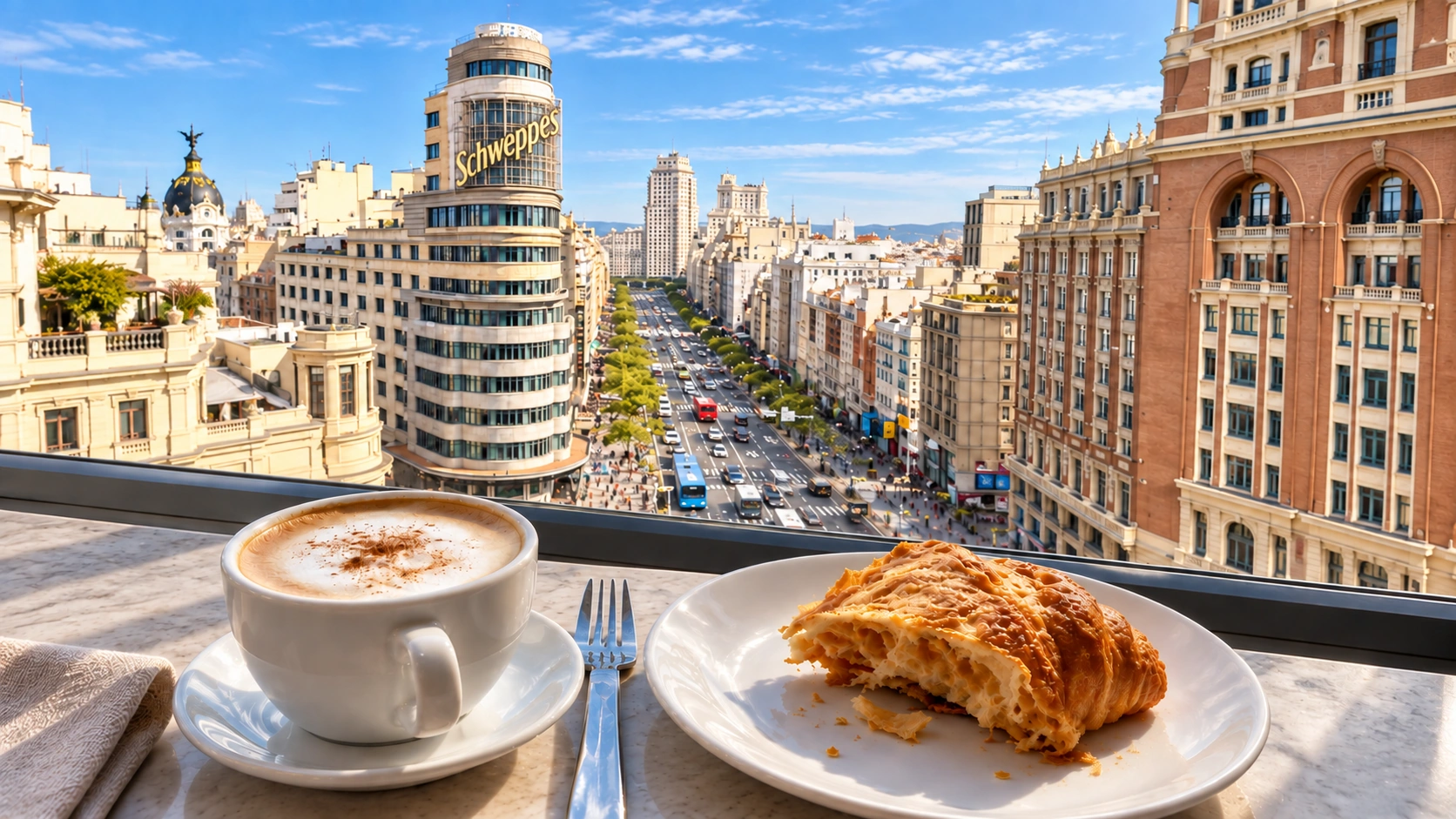
Your first morning in Madrid should involve a good cup of coffee, not twenty minutes of scrolling through reviews outside your hotel. But with cafés on almost every street around Sol and Gran Vía, choosing somewhere can take longer than breakfast itself. The useful question is what kind of morning you want. A generous brunch before a day of sightseeing? Coffee and cake in a setting that makes you put your phone away? Or a carefully brewed filter coffee before you head out to explore? These five addresses cover different moods rather than compete for a single “best breakfast in Madrid” title. The selection focuses on brunch and specialty coffee, with stops around Gran Vía, Callao, Chueca and the streets towards La Latina. Save the places that fit your plans. Whether you have just arrived, are waiting for hotel check-in or have a few hours left after check-out, a good breakfast is an excellent place to start. Madrid · DROP&WALK Journal Good mornings start with good coffee Where to have breakfast in central Madrid: five spots for a proper brunch, something freshly baked or a specialty coffee worth slowing down for. BreakfastBrunchSpecialty coffeeCentral Madrid2026 selection Your morning, at a glance Ready for a proper brunch? Start with EatMyTrip or Bucólico. Choosing the coffee first? Put Geisha on your shortlist. Just coffee and a light bite? Consider ALCHEMY. Staying around Callao? Despacito is a convenient place to begin. 01 Find the breakfast that fits your day Bring an appetite EatMyTrip A sit-down brunch that deserves its own space in your itinerary. Take your time Bucólico Coffee, homemade baking and a reason to linger in Chueca. Follow the beans Geisha Coffee For mornings when the origin and the brew matter most. Keep it simple ALCHEMY A small coffee stop to work into a walk towards La Latina. Start near Callao Despacito Breakfast and specialty coffee close to Gran Vía. 02 Five breakfast spots to save on your Madrid map Photo · EatMyTrip 01 EatMyTrip Gran Vía Calle del Barco, 8 · Near Gran Vía Some breakfasts simply get you out of the door. Others become part of the trip. EatMyTrip is the address to consider when you are hungry enough for the second kind. Its Gran Vía location takes an international approach to brunch, with dishes such as Turkish eggs with romesco, Benedict-style eggs, bowls, French toast and pancakes that are unlikely to arrive unnoticed. This is a good fit if your ideal holiday morning involves ordering something you would rarely make at home, adding a flat white and giving yourself time to enjoy both. Specialty coffee is part of the appeal alongside the food. We would work it into a morning around Gran Vía rather than squeeze it into a tight gap between bookings. Think of breakfast as the first plan of the day. VISIT WEBSITE OPEN IN GOOGLE MAPS What to look for Benedict-style eggs or Turkish eggs for a savoury brunch; pancakes if you are starting the day on a sweeter note. Coffee pairing A flat white is a straightforward choice alongside a generous breakfast. Choose it for A leisurely first morning in Madrid, a hearty brunch or breakfast that feels like an occasion. Photo · Bucólico Café 02 Bucólico Café Calle de Barbieri, 4 · Chueca A city break does not have to mean being in motion all day. Bucólico is the kind of place to consider when you would rather settle into the morning than rush through it. The concept brings together specialty coffee, international brunch dishes and homemade baking. Natural materials and a country-house-inspired aesthetic give the space a different feel from the busy streets around Gran Vía. Come for a full breakfast or keep it to coffee and something sweet. Either way, the setting is part of the reason to choose it: this is a stop for people who care about where they sit as much as what they order. Its Chueca address also gives your morning a direction. Afterwards, you can continue exploring the neighbourhood, wander towards Salesas or make your way back to Gran Vía. VISIT WEBSITE OPEN IN GOOGLE MAPS What to look for A brunch dish if you have time to stay, or something from the homemade baking selection. Coffee pairing Cappuccino or flat white. If you enjoy trying different beans, ask what is being served. Choose it for A slow morning with company, a coffee-and-cake break or breakfast before exploring Chueca. Product image · Geisha Roasters 03 Geisha Coffee Calle de las Navas de Tolosa, 6 · Near Callao If you check the coffee menu before looking at the food, Geisha is likely to be the name you save first. The appeal here starts with the beans. Geisha’s roasting approach puts attention on origin, variety and flavour profile, with coffees suited to espresso and filter methods such as V60. That makes it an interesting stop for anyone who enjoys finding out what is behind a particular cup. Our suggestion is to leave room for a recommendation. Tell the barista whether you prefer chocolatey, fruity or lighter flavours, then ask what they would brew that day. You do not need specialist vocabulary to start the conversation. Treat this as a coffee-led stop, with something light to eat if it takes your fancy. If your main priority is a large, sit-down brunch, EatMyTrip or Bucólico is the more natural starting point in this selection. VISIT WEBSITE OPEN IN GOOGLE MAPS How to approach breakfast Choose the coffee first, then see what you would like alongside it. What to ask the barista Which origin would they recommend today, and would it work best as an espresso or a filter coffee? Choose it for A coffee-focused morning or your first proper conversation about what makes one bean taste different from another. Image source · Locallya 04 ALCHEMY Specialty Coffee Calle de San Millán, 4 · Towards La Latina There is a lot to be said for a breakfast that leaves the rest of the day open. A good coffee, a little food and no need to make an event of it. ALCHEMY fits that mood. This small café puts coffee at the centre of the visit, with espresso drinks, filter options and simple breakfast choices such as toast or something sweet. Its location is especially useful if your plans take you towards La Latina, Tirso de Molina, Plaza Mayor or the El Rastro area. It gives you a coffee stop on that side of the centre rather than sending you back towards Gran Vía. Pick it when you want to start well and keep moving. The attraction is the straightforward combination of specialty coffee and a lighter breakfast. VIEW INSTAGRAM OPEN IN GOOGLE MAPS What to look for Toast or a light bite to go with your coffee. Coffee pairing A flat white for a familiar favourite, or ask about filter coffee if you want to explore the beans. Choose it for An informal breakfast before a walk around La Latina and Madrid’s historic centre. Photo · Todo está en Madrid 05 Despacito Specialty Coffee Calle de Jacometrezo, 15 · Near Callao Sometimes the most useful café recommendation is one that fits exactly where you already are. If you are staying near Callao or starting your day on Gran Vía, Despacito is a convenient address to have saved. The café combines specialty coffee with breakfast, brunch and baking, giving you room to decide how much of the morning you want to spend at the table. Keep it to a coffee and a pastry if you have plans, or look through the breakfast options if you need something more substantial. The coffee offering includes beans from different origins, so it is worth asking what is available. This is the practical pick for a central sightseeing day: breakfast first, then back out towards Gran Vía and the surrounding streets without a major detour. VISIT WEBSITE OPEN IN GOOGLE MAPS What to look for Something from the baking selection or a fuller breakfast, depending on your appetite. Coffee pairing Try a filter coffee if you are curious about the origin, or a cappuccino if you prefer a milky cup. Choose it for A breakfast stop near your hotel around Callao or a convenient start to a day on Gran Vía. 03 How to order specialty coffee without overthinking it “Specialty coffee” can sound like a club with its own language. In practice, the things that matter are easier to grasp: good beans, attention to where they come from, thoughtful roasting and careful preparation. The interesting part is how that shows up in the cup. Coffee can have natural sweetness and flavours that recall chocolate, nuts, citrus, fruit or flowers. Those tasting notes describe the coffee itself; they do not necessarily mean anything has been added. If you usually drink coffee with milk, start with a flat white or cappuccino. If you want to explore the flavour of the beans more directly, ask about a filter coffee. V60 is a pour-over brewing method, not a type of bean. The most useful thing you can tell a barista is what you enjoy. “Something chocolatey rather than fruity” gives them more to work with than trying to remember a list of coffee terms. “You do not need to become a coffee expert on holiday. You just need a cup good enough to make you pause.” Before you find a table Make room for breakfast. Leave the bags behind. An early arrival and a late hotel check-in leave you with a promising morning in Madrid and one awkward question: what do you do with your suitcase? The same thing happens on the last day. You have checked out, your train or flight is still hours away, and there is time for breakfast and another walk through the centre. It is a much easier plan when you are not finding space for luggage beside a café table. DROP&WALK Madrid offers automatic luggage lockers at Calle de Espoz y Mina, 32 , near Puerta del Sol. Book online, leave your bags and enjoy the city before returning to collect them within your booked period. BOOK LUGGAGE STORAGE IN MADRID DROP&WALK Madrid Address Calle de Espoz y Mina, 32 Location Near Puerta del Sol · Central Madrid Access Open 24 hours, 7 days a week Booking Reserve online from your phone 04 Breakfast in central Madrid: your questions answered Where can I have breakfast near Puerta del Sol? The cafés in this guide are spread across central Madrid rather than on the square itself. From Sol, look towards Gran Vía for EatMyTrip, towards Callao for Geisha and Despacito, or towards La Latina for ALCHEMY. Bucólico is in Chueca. Choose the one that fits the direction of your morning walk. Which places are good for a full brunch? Start with EatMyTrip if you want a generous, internationally inspired brunch. Bucólico is another option for a sit-down breakfast, combining brunch dishes with specialty coffee and homemade baking. Where should I go if coffee is my main priority? Geisha is the most coffee-focused choice in this selection, particularly if you enjoy asking about origins and brewing methods. ALCHEMY is also worth considering for coffee with a lighter breakfast. Where can I get breakfast around Gran Vía and Callao? EatMyTrip Gran Vía is on Calle del Barco. Geisha is on Calle de las Navas de Tolosa, and Despacito is on Calle de Jacometrezo. All three are useful options to check when planning a morning around Gran Vía and Callao. Do I need to book a table for breakfast? Check with the individual café, especially for a weekend brunch. Booking policies, opening hours and busy periods vary. Use the website or Google Maps links above to check the latest details before setting off. Is this a guide to traditional Spanish breakfasts? This selection focuses on specialty coffee and contemporary brunch cafés. It is designed for travellers looking for options such as flat whites, filter coffee, pancakes, egg dishes and homemade baking. Where can I leave my bags before breakfast or hotel check-in? DROP&WALK has automatic luggage lockers at Calle de Espoz y Mina, 32, near Puerta del Sol. You can reserve online and store your bags while you have breakfast or explore. The location is open 24/7; choose a booking period that covers your planned drop-off and collection. Leave a little space in your itinerary for breakfast You do not need to cross Madrid in search of the perfect morning. A few well-chosen addresses in the centre give you options: a long brunch, a light bite before sightseeing or a coffee that becomes a small highlight of the trip. Save two or three places, check when they open and decide how hungry you are when you wake up. The rest of the morning can take shape from there. Some of the best travel memories begin with a table, a warm cup and nowhere you need to be just yet. BOOK A LOCKER IN MADRID September 2026 selection. This guide is a shortlist for different breakfast preferences, not a ranked list. Menus, opening hours and availability may change. Check each venue’s current information before visiting. .daw-magazine{ --ink:#172033; --muted:#667085; --blue:#2457E6; --blue-dark:#153698; --blue-pale:#EEF3FF; --sand:#F7F2E9; --gold:#D19A3C; --white:#FFFFFF; --line:#DFE5EF; width:100%; max-width:1120px; margin:0 auto; padding:0; color:var(--ink); font-family:Arial,Helvetica,sans-serif; font-size:17px; font-weight:400; line-height:1.7; text-align:left; overflow-wrap:break-word; -webkit-font-smoothing:antialiased; } .daw-magazine *, .daw-magazine *::before, .daw-magazine *::after{ box-sizing:border-box; } .daw-magazine :where(div,section,article,header,footer,aside){ min-width:0; } .daw-magazine p, .daw-magazine ul, .daw-magazine blockquote{ margin:0 0 18px; } .daw-magazine p, .daw-magazine li{ font-family:Arial,Helvetica,sans-serif; font-size:inherit; line-height:1.7; } .daw-magazine p:last-child{ margin-bottom:0; } .daw-magazine h2, .daw-magazine h3{ margin:0 0 18px; padding:0; color:var(--ink); font-family:Georgia,"Times New Roman",serif; font-weight:700; text-transform:none; text-align:left; text-wrap:balance; } .daw-magazine h2{ font-size:clamp(28px,3.5vw,42px); line-height:1.16; letter-spacing:-.025em; } .daw-magazine h3{ font-size:26px; line-height:1.25; letter-spacing:-.015em; } .daw-magazine a{ color:var(--blue-dark); font-family:inherit; font-weight:700; text-underline-offset:4px; } .daw-magazine a:focus-visible{ outline:3px solid var(--gold); outline-offset:5px; } .daw-magazine img{ display:block; max-width:100%; border:0; } .daw-magazine strong{ font-weight:700; } /* HERO */ .daw-magazine .daw-hero{ position:relative; isolation:isolate; overflow:hidden; margin:0 0 28px; padding:clamp(30px,6vw,64px); border-radius:24px; background:#153698; background:linear-gradient(135deg,#10235F 0%,#153698 50%,#2457E6 100%); color:#FFFFFF!important; } .daw-magazine .daw-hero::after{ position:absolute; z-index:-1; right:-110px; bottom:-150px; width:360px; height:360px; border:1px solid rgba(255,255,255,.25); border-radius:50%; box-shadow: 0 0 0 36px rgba(255,255,255,.05), 0 0 0 72px rgba(255,255,255,.04); pointer-events:none; content:""; } .daw-magazine .daw-kicker{ margin:0 0 20px; font-size:12px; font-weight:700; line-height:1.5; letter-spacing:.14em; text-transform:uppercase; } .daw-magazine .daw-display{ max-width:850px; margin:0 0 22px; font-family:Georgia,"Times New Roman",serif; font-size:clamp(36px,5.5vw,62px); font-weight:700; line-height:1.08; letter-spacing:-.035em; text-wrap:balance; } .daw-magazine .daw-deck{ max-width:740px; margin:0 0 26px; font-size:clamp(18px,2vw,21px); line-height:1.6; } .daw-magazine .daw-chips{ display:flex; flex-wrap:wrap; gap:9px; } .daw-magazine .daw-chip{ display:inline-block; padding:7px 12px; border:1px solid rgba(255,255,255,.4); border-radius:999px; background:rgba(255,255,255,.08); font-size:12px; font-weight:700; line-height:1.5; } /* INTRO */ .daw-magazine .daw-opening{ display:grid; grid-template-columns:minmax(0,1.5fr) minmax(0,1fr); gap:24px; margin:0 0 48px; } .daw-magazine .daw-lead, .daw-magazine .daw-quick{ padding:clamp(24px,3vw,34px); border-radius:20px; } .daw-magazine .daw-lead{ border:1px solid var(--line); background:var(--white); box-shadow:0 10px 32px rgba(23,32,51,.045); } .daw-magazine .daw-quick{ border-top:4px solid var(--gold); background:var(--sand); } .daw-magazine .daw-label{ display:block; margin:0 0 16px; color:var(--blue-dark); font-size:12px; font-weight:700; line-height:1.5; letter-spacing:.1em; text-transform:uppercase; } /* SECTION HEADINGS */ .daw-magazine .daw-section{ margin:0 0 48px; } .daw-magazine .daw-section-head{ display:grid; grid-template-columns:48px minmax(0,1fr); gap:16px; align-items:start; margin:0 0 26px; padding:22px 0 0; border-top:1px solid var(--line); } .daw-magazine .daw-section-no{ padding-top:5px; color:var(--blue); font-family:Arial,Helvetica,sans-serif; font-size:16px; font-weight:700; line-height:1.5; } .daw-magazine .daw-section-head h2{ margin:0; } /* QUICK CHOICE */ .daw-magazine .daw-picker{ display:grid; grid-template-columns:repeat(auto-fit,minmax(min(100%,180px),1fr)); gap:14px; } .daw-magazine .daw-pick{ padding:22px 20px; border:1px solid var(--line); border-radius:18px; background:var(--white); font-size:15px; line-height:1.6; } .daw-magazine .daw-pick span{ display:block; margin:0 0 12px; color:var(--blue-dark); font-size:11px; font-weight:700; line-height:1.5; letter-spacing:.07em; text-transform:uppercase; } .daw-magazine .daw-pick strong{ display:block; margin:0 0 10px; color:var(--ink); font-family:Georgia,"Times New Roman",serif; font-size:22px; line-height:1.2; } /* PLACE CARDS */ .daw-magazine .daw-place{ overflow:hidden; margin:0 0 30px; border:1px solid var(--line); border-radius:22px; background:var(--white); box-shadow:0 12px 36px rgba(23,32,51,.055); } .daw-magazine .daw-place:last-child{ margin-bottom:0; } .daw-magazine .daw-place-image{ position:relative; overflow:hidden; aspect-ratio:16/8; background:#EEF1F6; } .daw-magazine .daw-place-image img{ width:100%; height:100%; margin:0; object-fit:cover; object-position:center; } .daw-magazine .daw-place-image.is-product img{ padding:24px; background:#F5F3F2; object-fit:contain; } .daw-magazine .daw-place-caption{ position:absolute; right:12px; bottom:12px; max-width:calc(100% - 24px); padding:7px 11px; border-radius:12px; background:rgba(23,32,51,.88); color:#FFFFFF!important; font-size:11px; line-height:1.4; } .daw-magazine .daw-place-body{ padding:clamp(24px,3.5vw,38px); } .daw-magazine .daw-place-top{ display:flex; gap:18px; align-items:flex-start; margin:0 0 24px; } .daw-magazine .daw-place-index{ flex:0 0 auto; padding-top:2px; color:var(--blue); font-family:Georgia,"Times New Roman",serif; font-size:38px; line-height:1.1; } .daw-magazine .daw-place-heading{ flex:1; min-width:0; } .daw-magazine .daw-place-heading h3{ margin:0 0 8px; font-size:clamp(26px,3vw,34px); line-height:1.2; } .daw-magazine .daw-address{ margin:0; color:var(--muted); font-size:14px; font-weight:400; line-height:1.5; } .daw-magazine .daw-place-grid{ display:grid; grid-template-columns:minmax(0,1.5fr) minmax(0,.85fr); gap:30px; align-items:start; } .daw-magazine .daw-place-aside{ padding:24px; border:1px solid var(--line); border-radius:16px; background:#F7F9FC; color:var(--ink); } .daw-magazine .daw-place-aside strong{ display:block; margin:0 0 7px; color:var(--blue-dark); font-size:14px; line-height:1.5; } .daw-magazine .daw-place-aside p{ margin:0 0 20px; font-size:15px; line-height:1.65; } .daw-magazine .daw-place-aside p:last-child{ margin-bottom:0; } /* BUTTONS */ .daw-magazine .daw-buttons{ display:flex; flex-wrap:wrap; gap:12px; margin:24px 0 0; } .daw-magazine a.daw-btn{ display:inline-flex; align-items:center; justify-content:center; max-width:100%; min-height:46px; padding:13px 20px; border:1px solid var(--blue); border-radius:12px; background:var(--blue); color:#FFFFFF!important; font-family:Arial,Helvetica,sans-serif; font-size:12px; font-weight:700; line-height:1.5; letter-spacing:.025em; text-align:center; white-space:normal; text-decoration:none!important; transition:background-color .2s ease; } .daw-magazine a.daw-btn:hover{ background:var(--blue-dark); border-color:var(--blue-dark); } .daw-magazine a.daw-btn-secondary{ border-color:var(--line); background:var(--white); color:var(--blue-dark)!important; } .daw-magazine a.daw-btn-secondary:hover{ border-color:var(--blue-dark); background:#F7F9FC; } /* COFFEE BLOCK */ .daw-magazine .daw-coffee{ display:grid; grid-template-columns:minmax(0,1.25fr) minmax(0,.85fr); gap:24px; } .daw-magazine .daw-coffee-text{ padding:clamp(24px,3vw,32px); border:1px solid var(--line); border-radius:20px; background:var(--white); } .daw-magazine .daw-quote{ display:flex; flex-direction:column; justify-content:center; margin:0; padding:clamp(26px,3vw,36px); border:0; border-radius:20px; background:var(--ink); color:#FFFFFF!important; font-family:Georgia,"Times New Roman",serif; font-size:clamp(24px,2.5vw,30px); font-style:normal; line-height:1.45; letter-spacing:-.01em; } .daw-magazine .daw-quote::before, .daw-magazine .daw-quote::after{ content:none; } /* DROP&WALK */ .daw-magazine .daw-locker{ display:grid; grid-template-columns:minmax(0,1.4fr) minmax(0,.85fr); gap:30px; padding:clamp(26px,4.5vw,48px); border-radius:24px; background:#153698; background:linear-gradient(145deg,#122457,#2457E6); color:#FFFFFF!important; } .daw-magazine .daw-locker-side{ align-self:start; padding:24px; border:1px solid rgba(255,255,255,.3); border-radius:18px; background:rgba(255,255,255,.07); } .daw-magazine .daw-locker-side h3{ font-size:25px; } .daw-magazine .daw-locker-list{ margin:0; padding:0; list-style:none; } .daw-magazine .daw-locker-list li{ margin:0; padding:14px 0; border-bottom:1px solid rgba(255,255,255,.22); font-size:15px; line-height:1.6; list-style:none; } .daw-magazine .daw-locker-list li:last-child{ padding-bottom:0; border-bottom:0; } .daw-magazine .daw-locker-list li::before{ content:none; } /* WHITE TEXT ON BLUE AND DARK BACKGROUNDS */ .daw-magazine .daw-hero, .daw-magazine .daw-hero *, .daw-magazine .daw-locker, .daw-magazine .daw-locker *, .daw-magazine .daw-quote, .daw-magazine .daw-quote *{ color:#FFFFFF!important; } /* LIGHT BUTTON INSIDE BLUE BLOCK */ .daw-magazine .daw-locker a.daw-btn{ margin-top:8px; border-color:#FFFFFF; background:#FFFFFF; color:#153698!important; } .daw-magazine .daw-locker a.daw-btn:hover{ background:#EEF3FF; border-color:#EEF3FF; color:#153698!important; } /* FAQ */ .daw-magazine .daw-faq{ display:grid; gap:14px; } .daw-magazine .daw-faq-item{ padding:24px; border:1px solid var(--line); border-radius:16px; background:var(--white); } .daw-magazine .daw-faq-item h3{ margin:0 0 10px; font-family:Arial,Helvetica,sans-serif; font-size:18px; font-weight:700; line-height:1.45; letter-spacing:0; } .daw-magazine .daw-faq-item p{ margin:0; font-size:16px; } /* FINAL */ .daw-magazine .daw-final{ margin:0; padding:clamp(28px,4.5vw,48px); border-radius:24px; background:var(--sand); text-align:center; } .daw-magazine .daw-final::before{ display:block; width:48px; height:4px; margin:0 auto 24px; border-radius:99px; background:var(--gold); content:""; } .daw-magazine .daw-final h2, .daw-magazine .daw-final p{ max-width:760px; margin-right:auto; margin-left:auto; text-align:center; } .daw-magazine .daw-final a.daw-btn{ margin-top:8px; } .daw-magazine .daw-small{ margin-top:26px; color:var(--muted); font-size:12px; line-height:1.6; } /* TABLET AND MOBILE */ @media(max-width:860px){ .daw-magazine .daw-opening, .daw-magazine .daw-place-grid, .daw-magazine .daw-coffee, .daw-magazine .daw-locker{ grid-template-columns:minmax(0,1fr); } .daw-magazine .daw-picker{ grid-template-columns:repeat(2,minmax(0,1fr)); } .daw-magazine .daw-pick:last-child{ grid-column:1 / -1; } } @media(max-width:560px){ .daw-magazine{ font-size:16px; line-height:1.65; } .daw-magazine h2{ font-size:28px; line-height:1.2; } .daw-magazine .daw-hero{ padding:30px 22px; border-radius:18px; } .daw-magazine .daw-display{ font-size:clamp(32px,8.5vw,42px); line-height:1.12; letter-spacing:-.025em; } .daw-magazine .daw-deck{ font-size:18px; } .daw-magazine .daw-kicker{ font-size:11px; letter-spacing:.09em; } .daw-magazine .daw-chip{ padding:6px 10px; font-size:11px; } .daw-magazine .daw-opening, .daw-magazine .daw-section{ margin-bottom:36px; } .daw-magazine .daw-section-head{ grid-template-columns:30px minmax(0,1fr); gap:10px; margin-bottom:22px; } .daw-magazine .daw-picker{ grid-template-columns:minmax(0,1fr); } .daw-magazine .daw-pick:last-child{ grid-column:auto; } .daw-magazine .daw-lead, .daw-magazine .daw-quick, .daw-magazine .daw-place-body, .daw-magazine .daw-coffee-text, .daw-magazine .daw-faq-item{ padding:22px; } .daw-magazine .daw-place{ border-radius:18px; } .daw-magazine .daw-place-top{ gap:12px; } .daw-magazine .daw-place-index{ font-size:30px; } .daw-magazine .daw-place-heading h3{ font-size:27px; } .daw-magazine .daw-place-image{ aspect-ratio:4/3; } .daw-magazine .daw-place-aside, .daw-magazine .daw-locker-side{ padding:20px; } .daw-magazine .daw-buttons{ display:grid; grid-template-columns:minmax(0,1fr); } .daw-magazine a.daw-btn{ width:100%; } .daw-magazine .daw-locker, .daw-magazine .daw-final{ padding:28px 22px; border-radius:18px; } .daw-magazine .daw-quote{ padding:28px 24px; font-size:24px; } } /* Introduction before the blue heading */ .daw-magazine .daw-intro{ margin:0 0 32px; padding:0; color:#172033; } .daw-magazine .daw-opening{ grid-template-columns:minmax(0,1fr); }
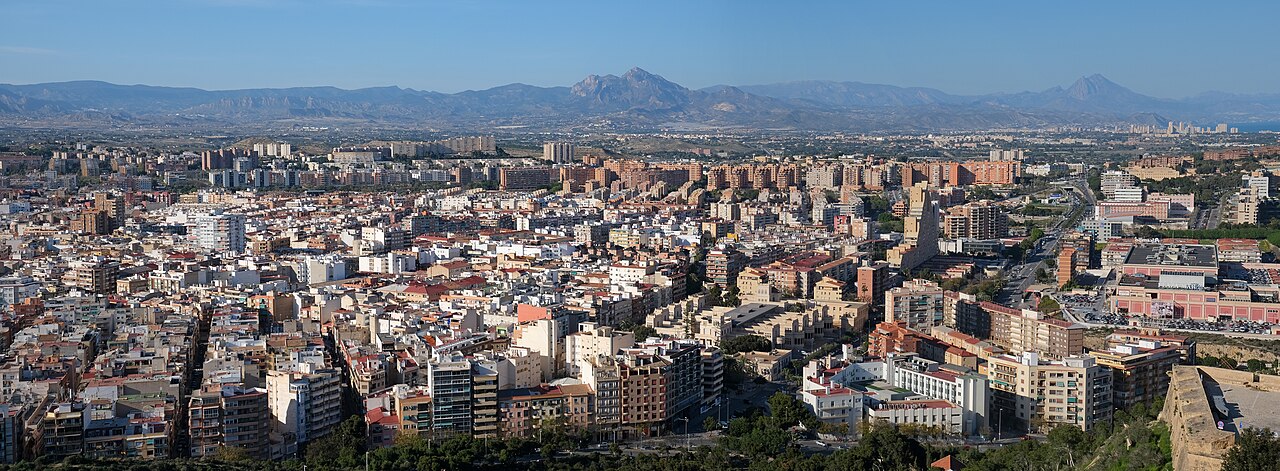
September means going back to routine in many places. Alicante is not one of them. The summer heat begins to ease, but the Mediterranean remains warm, terraces stay busy and Alicante enters one of the most enjoyable months of its cultural calendar. September 2026 brings together traditional neighbourhood festivals, concerts by the harbour, local food and wine events, sporting challenges and exhibitions. If you are planning a trip to Alicante this September, here is everything you need to organise it properly and make the most of the city. At a glance September still feels like summer Warm sea, more comfortable sightseeing weather and a packed calendar of festivals, food events, concerts and cultural experiences. In this guide Alicante · September 2026 01 September weather 02 Beaches and sea 03 What to pack 04 Events in 2026 05 Museums and exhibitions 06 Tabarca 07 One-day itinerary 08 Luggage storage 09 FAQ Climate Is the weather good in Alicante in September? Short answer Yes — September is still very much a summer month Warm days, pleasant evenings and plenty of sunshine make September one of the most comfortable times of year to explore Alicante. According to AEMET climate normals for 1991–2020, Alicante has an average September temperature of 23.5°C . Average daytime highs reach 28.5°C , while average overnight lows remain around 18.5°C . The city also receives approximately 250 hours of sunshine during the month. 23.5°C average temperature 28.5°C average high 18.5°C average low ≈250 h of sunshine 69% average humidity 56 mm average rainfall 3.3 days with at least 1 mm of rain 2.7 days with thunderstorms Source: AEMET climate normals for Alacant/Alicante . One important detail: September’s higher rainfall total does not mean constant wet weather. Rain usually arrives in a small number of concentrated Mediterranean storms, so a long run of dry days can be followed by a brief but intense downpour. Mediterranean Can you still go to the beach in September? Absolutely. Many locals actually prefer September to August. The Mediterranean Sea remains pleasantly warm, with an average water temperature of around 25–26°C and even higher readings often recorded at the beginning of the month. Postiguet, San Juan, La Albufereta, Almadraba and Urbanova are all excellent choices for swimming. Once the August holiday rush begins to fade, it also becomes easier to find space on the sand and enjoy the seafront at a slower pace. September 2026 follows an especially hot summer. By the end of August, experts from the University of Alicante’s Climatology Laboratory were reporting Mediterranean temperatures close to 29°C during the summer. As a result, the sea is particularly warm at the beginning of September. Postiguet Beach remains perfect for swimming throughout September. Photo: Kallerna / Wikimedia Commons, CC BY-SA 4.0. Packing list What to pack for Alicante in September There is no need to pack for autumn. T-shirts, dresses, shorts and lightweight footwear are suitable during the day. A light extra layer may be useful on evenings towards the end of the month. Essential Sunscreen The September sun is still strong. Essential Sunglasses Especially useful beside the sea. Practical Reusable water bottle Useful when exploring the centre and castle. Practical Comfortable shoes Alicante is best explored on foot. Just in case Light jacket Useful on some late-September evenings. Just in case Small umbrella Helpful if a short storm develops. September 2026 calendar Events in Alicante in September 2026 4–8 September Fiestas del Raval Roig A traditional celebration in Alicante’s former fishing quarter, with parades, music, fireworks, popular food events and a religious procession. 11 September · 22:00 Vanesa Martín The Casa Mía Tour 2026 comes to El Muelle Live beside Alicante harbour. 12 September · 10:00–22:00 Retroalacant 2026 Classic arcade machines, retro games, tournaments, workshops, exhibitors and music at Las Cigarreras. 12 September · from 21:00 Noche de Candiles More than 2,000 candles illuminate San Gabriel, accompanied by live music, markets, family activities and local shops in the streets. 13 September Pablo López The Spanish singer brings his El Niño del Espacio tour to El Muelle Live. 14–16 and 21–22 September La Millor Tapeta del Món Restaurants from across the province present Alicante’s produce and local cooking at CERCA. 15 September World Arepa Day A special food event organised in Alicante by Sabolé restaurant. 19 September · 11:00–17:00 Quintana en Vendimia Thirty-six wineries, Alicante DOP wines, tastings, food, live music and children’s workshops on Calle Poeta Quintana. 19 September I Travesía Uniendo Faros Five open-water swimming routes, including an ambitious 20-kilometre challenge between Cabo de las Huertas and Santa Pola. Second half of September Mig Any de Moros y Cristianos Villafranqueza marks the halfway point to its Moros y Cristianos festivities with music, community gatherings and a parade. 25 September M-Clan The Spanish rock band celebrates 30 years on stage with a concert at El Muelle Live. 25–27 September A las Bravas Plaza Séneca hosts a food competition dedicated to finding some of Alicante’s best patatas bravas. 26 September · 22:00 Raphael The Raphaelísimo tour arrives at El Muelle Live for the final weekend of September. 27 September XII Cross de Mercalicante The sporting programme also includes the VI Milla and the II 5K Salud Mediterránea. A candlelit evening in the Alicante area. Reference image: Somos L’Alacantí. Indoors Museums and exhibitions Not every September plan depends on a specific date. The warmest hours of the afternoon are also a good opportunity to discover Alicante’s museums and cultural spaces. MARQ El oro y el universo An international exhibition exploring the Indigenous knowledge and cultures of Colombia, open until May 2027. MACA Modern and contemporary art A permanent collection featuring Picasso, Dalí, Miró, Chillida and Sempere, alongside the temporary Coloramas exhibition. Fundación Mediterráneo De par en par Documents, manuscripts, maps and archives connected to prominent figures from Alicante. General admission is free. During the first few days of the month, Las Cigarreras also hosts La firmeza de un instante and Rock&Comix: Homenaje a Joaquín Ladrón , both open until 5 September. Day trip Visiting Tabarca in September September is one of the best months for a day trip from Alicante to Tabarca Island. Tourist boat services continue until 30 September, and astronomical observation experiences remain available into October. With less extreme heat than August, warm water and a slightly quieter island, it is difficult to imagine a better combination. Tabarca’s rocky coastline and clear Mediterranean water. Photo: Maria Concetta D’Amore / Wikimedia Commons, CC BY-SA 4.0. Practical itinerary What to do if you only have one day 01 Early morning · Castle Start at Santa Bárbara Castle before the sun reaches its strongest point. 02 Mid-morning · Old town Walk down towards the Basilica of Santa María and explore the historic centre. 03 Midday · Explanada and Postiguet Stroll beneath the palm trees and finish the morning beside the sea. 04 Afternoon · MARQ or MACA Spend the warmest part of the afternoon exploring one of Alicante’s museums. 05 Evening · September events Keep your evening free if your visit coincides with a concert, festival or food event. Before you go Practical travel tips Plan ahead Book concerts in advance The El Muelle Live dates are among the month’s most popular events. Local hours Adjust your schedule Lunch often begins around 14:00, while dinner usually starts after 21:00. Weather Check the forecast Mediterranean storms can be brief but intense. Travel rhythm Combine beach and city A morning by the sea followed by an afternoon museum or old-town walk works particularly well. Explore luggage-free Enjoy September without carrying your bags Arriving before check-in or leaving the city several hours after check-out? Store your luggage in central Alicante and make the most of the time you have left. DROP&WALK Locker Alicante C. Susana Llaneras, 52 · Open 24/7 ALICANTE10 · 10% off Book online → Verdict Is Alicante worth visiting in September? Yes. In all the ways that matter, it still feels like summer. You can swim, eat beside the sea and spend a long evening on a terrace. At the same time, Alicante begins to settle into a different rhythm. Neighbourhood festivals, local wine, food events, concerts, exhibitions and sporting events return to the calendar. The weather is more comfortable for walking, and you can combine beach time with city sightseeing without having to choose between them. For us, this is one of the best versions of Alicante. Common questions Frequently asked questions Where can I store my luggage in Alicante? DROP&WALK Locker Alicante is located at C. Susana Llaneras, 52, in the city centre. The automatic luggage lockers are open 24/7, can be booked online and allow you to access your belongings again during the reserved period. Use the code ALICANTE10 for 10% off. How warm is Alicante in September? The average daytime high is approximately 28.5°C, the average overnight low is 18.5°C and the monthly average temperature is 23.5°C, according to AEMET climate normals. Can you swim in Alicante in September? Yes. The Mediterranean is usually around 25–26°C, so September remains an excellent month for swimming and spending time at the beach. Does it rain a lot in September? Most days are dry. However, September can bring short and intense Mediterranean storms, so it is worth checking the local forecast before a day trip. What events are taking place in Alicante in September 2026? Highlights include the Fiestas del Raval Roig, Retroalacant, Noche de Candiles, Quintana en Vendimia, A las Bravas, open-water swimming events and concerts at El Muelle Live. Is Alicante better in August or September? August offers the height of the summer season. September still provides warm sea and lively Mediterranean evenings, but temperatures are usually more comfortable for walking, visiting museums and attending local events. DROP&WALK JOURNAL Alicante · Valencia · Granada · Madrid dropandwalk.com
Alicante Food Guide: Best Restaurants, Tapas & Rooftop Bars Alicante is no longer just a beach destination. It is one of Spain's most exciting food cities, home to two Michelin-starred restaurants, a thriving tapas culture and rooftop bars with some of the most dramatic views on the Mediterranean coast. Whether you arrive by plane, train or cruise ship, the food scene here is worth planning your trip around. This guide covers the best restaurants in Alicante, what to order, where to drink at sunset and how to make the most of your time in the city — without dragging your luggage around. What to eat in Alicante: the dishes you can't miss Alicante's cuisine is built on three things: the sea, the land and time. The rice dishes alone are worth the trip — but there is much more to explore once you sit down at a local table. Arroz a banda — the defining dish of the Alicante coast. Rice cooked slowly in a rich fish broth, served separately from the seafood, with homemade alioli on the side. Simple, precise and deeply satisfying. Gambas rojas de Santa Pola — the local red prawns, caught in the waters just south of the city. Served boiled or grilled with nothing but a pinch of salt, they are among the finest shellfish in Spain. Caldero alicantino — a hearty fisherman's stew of rock fish and rice, originating from the fishing villages of the Marina Alta. A winter dish with real depth of flavour. Olleta marinera — a traditional stew of salt cod, vegetables and legumes. Less known outside the province, but a staple in old-school local restaurants. Turrón de Jijona — the soft almond nougat made in the nearby town of Jijona, with its own protected designation of origin. Buy it at a local confectionery shop, not at the airport. Best restaurants in Alicante Alicante has two Michelin-starred restaurants within the city limits and more than a dozen others recommended by the Guide's inspectors. Here is the essential selection — from high-end tasting menus to the best tapas bars in town. MICHELIN-STARRED RESTAURANTS Monastrell (★ MICHELIN since 2013) View on Maps The only Michelin-starred restaurant in the city of Alicante. Chef María José San Román is one of Spain's leading authorities on rice cooking and extra virgin olive oil. Much of the produce comes from her own organic farm, Terramón, located 15 km outside the city. Three tasting menus are available — Alicante (from €75), Monastrell and the chef's signature menu. Book at least two to three weeks in advance. Baeza & Rufete (★ MICHELIN) View on Maps The most contemporary fine dining address in Alicante. Chef Joaquín Baeza, trained under Martín Berasategui, builds his menus around aromatic herbs he picks himself, local olive oils and the extraordinary diversity of Alicante's seasonal produce. The Fórmula 1 Gastro lunch menu, from €50, is the best entry point into the city's high gastronomy. MICHELIN GUIDE RECOMMENDED La Ereta View on Maps Perched on the hillside below Santa Bárbara Castle, La Ereta has one of the best terraces in the city. Chef Dani Frías offers two Mediterranean menus focused on seasonal seafood. Go for lunch on a clear day — the views over the port and the sea are exceptional. El Portal Alicante View on Maps A 21st-century taberna that combines a tapas bar, a gastronomy restaurant and a craft cocktail bar under one roof. The gambas rojas from Santa Pola, the whole boiled crab and the house vermouth are non-negotiable. One of the best cocktail lists in Alicante. La Taberna del Gourmet View on Maps The most beloved tapas institution in Alicante. No reservations, always buzzing, with a bar counter loaded with suckling pig, foie gras montaditos and grilled octopus. Arrive when it opens or be prepared to wait — it is always worth it. Nou Manolín View on Maps Open since 1972 and still the reference restaurant for generations of Alicante locals. The best caldero in the city. Two areas: a walk-in tapas bar on the ground floor and a proper dining room upstairs. The seafood display at the bar is a sight in itself. Manero View on Maps A former grocery store reinvented as a gastro-lifestyle concept. Iberian cold cuts, rice dishes and fish and meat cooked over charcoal. One of the most photographed interiors in Alicante — the space is as much a draw as the food. Best rooftop bars and lounges in Alicante Few cities offer what Alicante does at sunset: a cocktail on a rooftop terrace while the floodlit walls of Santa Bárbara Castle glow above the city skyline. These are the best rooftop bars to do it right. Highbar Rooftop — 7th floor, Odyssey Rooms View on Maps The locals' favourite for summer evenings. Craft cocktails made with local ingredients, wines from small Alicante wineries and sunset tastings with castle views. The quality of the cocktail programme sets it apart from most hotel rooftops in Spain. Cúpula / Cuppola — Calle Gravina View on Maps The trendiest rooftop of the moment. Bold interiors with art and cinema references, and the Cuppola Martini as the house signature. Great castle views and a crowd that takes its aperitivo seriously. Boga Sky Bar — 10th floor, Hotel Port Alicante, San Juan Playa View on Maps The go-to option for sea views. Chillout atmosphere, live DJ sets and a cocktail menu built around local produce. The view stretches across the bay towards the mountains — best experienced in the last hour before dark. La Milagrosa Rooftop — Hotel La Milagrosa, old town View on Maps The most beloved rooftop in the historic quarter, with direct views up to Santa Bárbara Castle. Relaxed atmosphere, a wide cocktail menu and a mainly local crowd. The ideal spot for your first evening in the city. La Terraza de Amérigo — 4th floor, Hospes Amérigo View on Maps The most elegant option. Five-star hotel service, a well-curated wine list and a calm, sophisticated atmosphere. Perfect for a special occasion or a business dinner that calls for something memorable. Terraza Mira Miralta — Eurostars Hotel Pórtico View on Maps Right next to the Ayuntamiento, with a unique angle on the Town Hall square and the castle above. DJ nights on summer Saturdays and a menu of gourmet tapas that hold their own against the view. Practical tips for eating well in Alicante MEAL TIMES Lunch in Alicante runs from 2:00 PM to 4:30 PM. Dinner does not start before 9:00 PM. Arriving at 8:00 PM means being the first — and often the only — table. Adapting to the local schedule makes the difference between eating well and eating wherever has a free seat. RESERVATIONS Monastrell and Baeza & Rufete require bookings two to three weeks ahead, especially in high season. La Taberna del Gourmet does not take reservations — arrive at opening time or be prepared to wait at the bar. CENTRAL MARKET The Mercado Central is a mandatory stop before any restaurant visit. On Friday mornings: fresh gambas, local cheeses and freshly made alioli. The best aperitivo in Alicante costs under five euros. LOCAL WINES The Alicante DO produces excellent monastrell-based red wines at very accessible prices. Ask for «vino tinto local» — at €4–6 a glass, it almost always delivers. LUGGAGE STORAGE If you arrive with a bag before check-in or have an afternoon flight on the way out, do not waste the morning at the hotel. DROP&WALK automatic lockers in the centre of Alicante are open 24 hours, no queues, no staff needed. Book online with the code ALICANTE10 for a 10% discount. Frequently asked questions (FAQ) Are there Michelin-starred restaurants in Alicante? Yes. The city has two: Monastrell (★ since 2013, chef María José San Román) and Baeza & Rufete (★). More than a dozen other restaurants in the city are recommended by MICHELIN Guide inspectors. Within the province, less than two hours away, you will find Quique Dacosta in Dénia (★★★), one of Spain's greatest restaurants. What is arroz a banda and where can I try it? Arroz a banda is the most iconic dish of the Alicante coast: rice cooked in fish broth and served with homemade alioli. The best places in the city to try it are Monastrell, La Ereta and Nou Manolín. What is the best rooftop bar in Alicante? It depends on what you are looking for. For craft cocktails with castle views: Highbar Rooftop. For a trendy crowd and design interiors: Cúpula. For sea views and a chillout vibe: Boga Sky Bar. For a relaxed first evening in the old town: La Milagrosa Rooftop. Where can I store my luggage in Alicante? DROP&WALK automatic lockers in the city centre are available 24 hours a day with no staff and no queues. Book online and use the code ALICANTE10 for a 10% discount. Ideal if you want to spend the day eating, drinking and exploring the city without carrying your bag. When is the best time to visit Alicante for food? May–June and September–October offer the best combination: excellent seasonal produce, fewer tourists and perfect weather for terrace dining. August is busy and very hot, but the rooftop bars run at full capacity and the city is at its most electric.
Updated: 11 August 2026 Arriving before hotel check-in or leaving the city hours after check-out can turn a good travel day into a logistical problem. DROP&WALK offers a simple alternative: private, self-service luggage lockers that can be booked online and accessed without waiting at a reception desk. DROP&WALK currently operates 24/7 luggage storage locations in central Alicante, Valencia, Granada and Madrid. Travellers choose a city, locker size and rental period online, then receive their access details by email. The result is straightforward: store your bags, keep your plans and explore the city hands-free. What is DROP&WALK? DROP&WALK is a Spanish network of automated luggage locker facilities created for real travel situations: early arrivals, late departures, short stopovers and days when carrying a suitcase simply gets in the way. Each booking assigns the customer an individual locker. There is no need to leave luggage with a shop, hotel reception or third-party host. The locations are self-service, while text support is available if help is needed with a reservation or access. Service: automated self-service luggage lockers Current cities: Alicante, Valencia, Granada and Madrid Opening hours: 24 hours a day, seven days a week Booking: online at dropandwalk.com Access: personal entrance and locker details sent by email Locker sizes: M, L and XL, subject to availability at each location Support: text assistance via WhatsApp and email How do DROP&WALK luggage lockers work? The complete process takes place online and is designed to be easy to follow from a mobile phone. Choose your city. Select Alicante, Valencia, Granada or Madrid. Select a locker. Choose the size and rental period that suit your luggage and schedule. Book online. Enter your contact details and complete the payment. Check your email. Your access information and instructions are sent after booking. Store your luggage. Enter the premises, open the assigned locker and enjoy the city without your bags. A locker can be opened more than once while the reservation is active. If you need to collect a jacket, add a shopping bag or reorganise your belongings, choose the option to open the locker and continue the rental rather than ending it. Which luggage locker size should you choose? The best size depends on the largest item you want to store, not only on the number of bags. Exact dimensions and live availability should always be checked during booking because locker formats may vary by location. M locker A practical option for a backpack, handbag or another small piece of luggage. L locker Recommended for cabin luggage. One L locker can usually hold two standard cabin-size suitcases and a small backpack or bag, depending on their exact shape. XL locker Recommended for one large checked suitcase, including a typical 20 kg suitcase. Large rigid suitcases normally require one XL locker each. If you are unsure, contact DROP&WALK before booking and provide the city, number of bags and approximate suitcase sizes. This helps the support team recommend the most suitable option. When is luggage storage useful? Luggage storage is most useful when your travel schedule and accommodation schedule do not match. A central locker can give you several extra hours to enjoy the destination instead of waiting with your bags. you arrive before your hotel or apartment check-in; you check out several hours before your flight, train or bus; you are visiting the city during a stopover; you want to visit a museum, restaurant, shop or beach without luggage; you are travelling with children and want to keep your hands free; you need access early in the morning or late at night; you want a private locker instead of leaving bags at a staffed counter. DROP&WALK luggage storage locations in Spain All current DROP&WALK locations are in central areas that travellers already use. Each city page contains the exact location, current availability and booking options. Luggage storage in Alicante city centre Address: Calle Susana Llaneras, 52, 03001 Alicante DROP&WALK Alicante is located close to the Central Market, Teatro Principal, Rambla de Méndez Núñez and the route towards Alicante's old town and Postiguet Beach. It is useful for travellers arriving before check-in, leaving after check-out or using the C6 airport bus. Alicante is an easy city to explore on foot, but warm weather and seaside routes are much more enjoyable without a heavy suitcase. Booking a central locker lets you use your remaining time for the old town, the port, the beach or Santa Bárbara Castle. Luggage storage in central Valencia Address: Carrer de Sant Vicent Màrtir, 51 izquierda, 46002 Valencia DROP&WALK Valencia is close to Plaza del Ayuntamiento, Estación del Norte and the Central Market. Its position makes it easy to include in a walking route through the historic centre without making a long detour to store or collect luggage. Once your bags are stored, you can have lunch, visit the market, walk towards the cathedral, shop in the centre or enjoy the last hours of your stay without pulling a suitcase through busy streets. Luggage storage in Granada city centre Address: Calle Montereros, 3, 18001 Granada DROP&WALK Granada is near Puerta Real, Calle Recogidas, Plaza Bib-Rambla and Granada Cathedral. The city's cobbled streets, narrow lanes and hills make a luggage locker particularly useful for anyone with a wheeled suitcase. Store your bags before exploring the centre, visiting local cafés or continuing towards the Albaicín. The facility is open 24/7 and works through online booking and self-service access. Luggage storage near Puerta del Sol in Madrid Address: Calle de Espoz y Mina, 32, 28012 Madrid DROP&WALK Madrid is a short walk from Puerta del Sol, with convenient access to Plaza Mayor, Gran Vía and the streets of central Madrid. It is a practical option for early arrivals, late departures and short connections in the capital. Instead of taking luggage through crowded central streets, you can reserve a locker before arrival, store your bags and continue with lunch, shopping, sightseeing or a meeting. Why choose a self-service luggage locker? 24/7 access Travel does not always follow reception hours. DROP&WALK locations are open around the clock, so customers can arrive early or collect bags late as long as the selected time is covered by the booking. Individual locker space Each reservation is linked to an assigned locker. Your belongings are not mixed with luggage from other customers or handed to an unrelated third-party host. Online booking before arrival Available locker sizes, rental periods and prices are displayed before payment. Booking in advance confirms availability and provides access information before you reach the location. Central locations The four current facilities are positioned near major squares, historic centres, public transport and popular walking routes. This reduces unnecessary travel just to leave or collect a suitcase. Access during the rental period Customers can reopen their locker while the booking remains active. This is useful when plans change during the day or an item is needed before final collection. Human support when needed The facilities are automated, but assistance is available by text. For help, send a WhatsApp message to +34 691 106 147 or email info@dropandwalk.com . Frequently asked questions Is DROP&WALK open 24 hours? Yes. Current DROP&WALK locations in Alicante, Valencia, Granada and Madrid are open 24 hours a day, seven days a week. Do I need to reserve a luggage locker in advance? Advance booking is recommended because it confirms availability and gives you the access details before arrival. You can also book from your phone at the location if a suitable locker is still available. How are the entrance and locker codes delivered? The access information is sent to the email address entered during booking. Check the address carefully before payment and look in the spam folder if the message does not appear in the inbox. Can I open my locker more than once? Yes. You may open and close the assigned locker as often as necessary during the paid rental period. Choose the option to open and continue the rental if you still need the locker. Can two cabin suitcases fit in one locker? Two standard cabin-size suitcases and a small bag can usually fit in one L locker, depending on their exact measurements and shape. A large checked suitcase normally requires an XL locker. How long can luggage be stored? DROP&WALK offers short-stay and 24-hour options. Available rental periods depend on the city and are displayed during booking. Contact support for longer or multi-day storage. What happens if I arrive a few minutes late? There is a five-minute grace period. After that, additional time is charged according to the locker size and applicable rate. Follow the payment instructions provided when collecting the luggage or contact support to arrange a longer extension. Are prices the same in every city? No. Prices depend on the location, locker size and rental period. The final amount is displayed before payment so it can be reviewed before the reservation is confirmed. Is there staff at the location? DROP&WALK is an automated self-service service and does not require an on-site reception desk. Text support is available if assistance is needed. Book a DROP&WALK luggage locker Choose Alicante, Valencia, Granada or Madrid, check live availability and reserve the locker size you need at dropandwalk.com . Your access information will be sent by email, allowing you to store your luggage and enjoy the city on your own schedule. Store your luggage. Walk freely.
Franchise · Spain · 2026 DROP&WALK Locker: smart luggage storage that runs 24/7 with no staff Tourism in Spain breaks records every year. Every traveler faces the same problem: where to leave a suitcase while exploring the city. DROP&WALK Locker turns that problem into a stable, automated business. 96.8 M tourists visited Spain in 2025 — an all-time record Source: INE FRONTUR, Feb. 2026 $2.1 bn global luggage storage market size in 2024 Source: DataIntelo, 2025 +10.2% CAGR of the luggage storage market, 2025–2033 Source: DataIntelo, 2025 The luggage storage market: data and forecasts According to the latest industry research, the global luggage storage market reached $2.1 billion in 2024 and is projected to grow to $5.1 billion by 2033, at an annual growth rate of 10.2%. The main driver is the recovery and expansion of international tourism after the pandemic. Global luggage storage services market, billion USD · forecast 2024–2033 Source: DataIntelo Luggage Storage Market Report, 2025 · dataintelo.com/report/luggage-storage-market 2.1 2024 2.3 2025 2.6 2026 2.8 2027 3.1 2028 3.4 2029 3.8 2030 4.2 2031 4.6 2032 5.1 2033 Growth $2.1bn → $5.1bn · CAGR 10.2% · 2025–2033 Spain: the ideal market for luggage storage According to official data from Spain's National Statistics Institute (INE), Spain welcomed 96.8 million international tourists in 2025 — an absolute all-time record, up 3.2% year-on-year. In 2024 the figure was 93.8 million, with total tourist spending reaching €126.3 billion (+16.1%). Sources: INE FRONTUR December 2025, Feb. 2026 · ine.es/dyngs/Prensa/en/FRONTUR1225.htm | La Moncloa, Feb. 2025 · lamoncloa.gob.es International tourists in Spain, millions of people · 2020–2025 Source: INE (Instituto Nacional de Estadística) · ine.es 19.0 2020 31.2 2021 71.6 2022 85.1 2023 93.8 2024 96.8 🏆 2025 Cities where DROP&WALK operates Alicante ✓ Live Madrid ✓ Live Granada ✓ Live Valencia ✓ Live Barcelona Coming soon Málaga Coming soon Seville Planned Your city Available? Why the automated model is more profitable DROP&WALK's main difference from most competitors is zero staffing costs while running around the clock. This fundamentally changes the business economics. Comparison of key parameters · score out of 10 No staff required 10 / 2 24/7 operation 10 / 4 Net margin 8 / 4 Scalability 9 / 3 Low entry barrier 7 / 5 DROP&WALK Traditional storage ⚡ No staff Lockers open with a code from a smartphone. No employees on payroll. 🕐 Round-the-clock income Your location earns while you sleep. Operates 365 days a year. 📈 Scalability Once one location pays off, opening a second one is faster. Tech and brand already exist. 🔒 Stable demand Tourists keep coming to Spain regardless of economic cycles. Who uses luggage storage DROP&WALK's customer isn't just the classic tourist. The audience is broader: business travelers, shoppers, early arrivals, and late departures. Distribution of use cases · urban luggage storage (market estimate) 38% Tourist between hotels 28% Day off before/after a flight 16% Business traveler 12% Shopping / leisure 6% Other How the franchise model works DROP&WALK takes care of everything technical and marketing-related. Your job is to manage the location and grow the business. 1 Location selection DROP&WALK helps choose a premises in the city center with maximum tourist traffic. The right location is the foundation of profitability — the closer to the main attractions, the higher the occupancy. 2 Full technical installation The DROP&WALK team installs the lockers, connects the booking system, and sets up all digital equipment. You don't need to understand the technology — you arrive at a ready-made location. 3 Training and marketing Full onboarding, brand support, and advertising campaigns — travelers find your location from day one through the website, app, and maps. 4 Automated operation Customers book online, receive an access code, and use the locker without your involvement. The business runs 24/7 on its own. You can monitor statistics from anywhere in the world. 5 Scaling Once the first location pays off, adding a second is much faster and easier. The model is designed from the start to grow — the brand, technology, and processes are already in place. 🧳 Ready to open your own DROP&WALK location? Tourism in Spain grows every year. The best locations are being taken right now. Contact the team and find out if your city is available. Request franchise information → Data sources 1. INE — Instituto Nacional de Estadística, FRONTUR December 2025 (February 2026): ine.es/dyngs/Prensa/en/FRONTUR1225.htm 2. La Moncloa (February 2025): Tourism spending exceeds 126 billion euros in 2024: lamoncloa.gob.es 3. DataIntelo (2025): Luggage Storage Market Research Report 2033: dataintelo.com/report/luggage-storage-market 4. Euronews (October 2025): Spain smashes summer visitor records in 2025: euronews.com/travel/2025/10/02
Some cities make you check the map every few minutes. Valencia makes you want to look up. Early in the morning, light filters through the glass of the Central Market and falls across fruit, fish, cured ham and spice stalls. A few streets away, the stonework of the Silk Exchange recalls the years when Valencia traded across the Mediterranean. Then come the trees of the old Turia riverbed and, almost without warning, the white curves of the City of Arts and Sciences. And the sea is still waiting. Valencia has a quality that is particularly valuable on a short city break: there is a great deal to see, but the city rarely feels exhausting . The historic centre is easy to explore on foot, the Turia Gardens connect large parts of the city, and neighbourhoods such as Ruzafa and Cabanyal can completely change the mood of the day within just a few kilometres. Whether you have one day, a weekend or three full days, you can build a realistic Valencia itinerary without reducing the city to a rushed checklist. This guide explains what to see and do in Valencia in 1, 2 or 3 days , how to group the main sights, and where to leave enough space for one of Valencia's greatest pleasures: simply enjoying where you are. The short answer How many days do you need in Valencia? For a first visit to Valencia, 2 or 3 days is ideal. With one day, you can explore the historic centre, walk or cycle through part of the Turia Gardens and finish at the City of Arts and Sciences. With two days, add Ruzafa, Cabanyal, the beach and the Marina. With three days, visit L'Albufera and El Palmar, or spend more time at the Oceanogràfic, museums and neighbourhoods. 1 day Old Town · Turia Gardens · City of Arts and Sciences 2 days + Ruzafa · Cabanyal · beach · Marina 3 days + L'Albufera · El Palmar or a cultural day In this guide Valencia, chapter by chapter 01 Valencia in 1 day 02 Valencia in 2 days 03 Valencia in 3 days 04 Getting around 05 Luggage & check-in 06 FAQs Your Valencia itinerary Three days, three ways to experience the city 01 History and the future Central Market → Silk Exchange → Cathedral → Plaza de la Virgen → El Carmen → Serranos Towers → Turia Gardens → City of Arts and Sciences. 02 Neighbourhoods and the Mediterranean Ruzafa → Colón Market → Cabanyal → beach → Marina de València. 03 Water and rice L'Albufera → El Palmar → boat ride → sunset. 01 Day 1 Things to Do in Valencia in 1 Day If you only have one day in Valencia, the most practical itinerary combines the Old Town in the morning, the Turia Gardens in the afternoon and the City of Arts and Sciences towards the end of the day. You could technically add the beach, the Oceanogràfic and L'Albufera on the same day. Enjoying them would be another matter. Valencia rewards people who walk more than people who rush. Valencia Central Market. Image reference: Visit València. 09:00 · Central Market: start where the city wakes up There are few better ways to enter a city than through its market. Early in the morning, while many cafés in the centre are still setting out their tables, Valencia Central Market (Mercado Central) is already fully awake. Produce from the Valencian huerta, fish, cheese, cured meats, spices, nuts and conversation fill one of the city's most recognisable Modernist buildings. The market's main activity takes place in the morning from Monday to Saturday, so it makes sense to place it at the beginning of your route rather than save it for later. But do not come only to shop. Look up. Iron, ceramics, stained glass and large domes make the building part of the experience. Markets are still among the most honest places to begin understanding a city, and Valencia is no exception. 10:00 · The Silk Exchange: when Valencia looked out to the Mediterranean Leave the market and you only need to cross a few metres. Opposite stands the Silk Exchange (Lonja de la Seda) , one of Valencia's most important historic buildings and a UNESCO World Heritage Site. Its architecture tells the story of a city that once occupied a privileged position on Mediterranean trade routes. Inside, the Column Hall changes the scale completely, with twisting stone columns rising towards the vaulted ceiling like a forest. It is elegant, monumental and unexpectedly calm — the kind of building that can explain part of a city's history without needing many words. 11:00 · Ciutat Vella: put the map away for half an hour At this point, it is worth doing something unusual in a travel guide: stop following the guide. Walk through Plaza Redonda. Turn down a street simply because it looks interesting. Look into a courtyard. Step inside a small shop. Notice the façades. Ciutat Vella, Valencia's Old Town, contains many of the city's essential sights , but part of its appeal lies in the places that do not appear with a star on a map. Valencia makes sense on foot. Its historic centre makes even more sense that way. 11:45 · Valencia Cathedral, El Miguelete and Plaza de la Virgen Sooner or later, you will arrive at Valencia Cathedral . A few steps later comes one of the great urban spaces in the city: Plaza de la Virgen . The Cathedral, the Basilica of Our Lady of the Forsaken and the Palau de la Generalitat surround a square that has been at the religious and civic heart of Valencia for centuries. If you want to see the city from above, climb El Miguelete , the Cathedral's bell tower. There are plenty of steps. The reward is at the top, where the rooftops of Ciutat Vella form one of the best views over the historic centre. 13:00 · El Carmen and the Serranos Towers From Plaza de la Virgen, continue towards El Carmen . Valencia becomes slightly less formal here. Narrow streets, street art, small shops, terraces, historic palaces and fragments of old city walls sit within a few blocks of one another. You do not need an exact route. El Carmen is better when you allow a street or two to take you slightly off course. Finish the walk at the Serranos Towers (Torres de Serranos) , one of the monumental gates of the medieval city. Then it is time to address a serious matter: lunch. What to Eat in Valencia on a First Visit 14:00 · Lunch is part of the itinerary Valencian food is much broader than paella, although a good paella remains one of the experiences worth seeking out on a first visit. Valencia is shaped by rice, the huerta and the Mediterranean. You will find dry and creamy rice dishes, esgarraet, titaina, seasonal clóchinas and a food culture that still has a strong relationship with local produce. Then there is the esmorzaret , the substantial mid-morning meal that may include an appetiser, a generous sandwich, a drink and coffee — and which Valencians take seriously enough to deserve a category of its own. One simple paella tip: choose the restaurant before you become hungry. A terrace beside a monument is a location. It is not automatically a restaurant recommendation. The former Turia riverbed is now one of Valencia's major green routes. Image reference: Visit València. What to Do in Valencia in the Afternoon 16:00 · Turia Gardens: walk through a former riverbed The Turia Gardens are one of the best places to walk or cycle in Valencia, linking the historic centre with the City of Arts and Sciences. The former course of the Turia River has been transformed into a long green corridor of gardens, bridges, sports areas and paths running through much of the city. For a first-time visitor, it has another major advantage: you can move from one part of Valencia to another without feeling that you are simply spending time in transit. Here, the journey is part of the visit. Recommended partner How to Explore Valencia by Bike Valencia is particularly easy to explore by bike: the city is flat, has an extensive network of bike lanes, and the Turia Gardens make it possible to cross much of the city away from traffic. For those who prefer to discover Valencia with a local guide, Bikes & Tours Valencia offers guided bike tours from its shop in Ruzafa. C. de Puerto Rico, 23 · 46006 Valencia The Valencia Bike Tour: Top 25 Highlights takes approximately 2.5 hours and combines the historic city centre, the Turia Gardens and the City of Arts and Sciences. It’s a comfortable way to explore different parts of Valencia in just a few hours and make the most of your time in the city. Tours are run in small groups and are available in several languages. Guests can choose between a city bike or e-bike , depending on their preference. Bikes & Tours Valencia also offers bike and e-bike rentals for a few hours or several days, as well as other routes for exploring Valencia and its surroundings. Tour Valencia Bike Tour: Top 25 Highlights Duration ≈ 2.5 hours Bike City Bike / E-Bike Route Historic Centre · Turia Gardens · City of Arts and Sciences Book Valencia Bike Tour → 17:30 · City of Arts and Sciences And then, near the end of the Turia Gardens, Valencia changes again. After the stone of the historic centre and the green of the former riverbed come white surfaces, glass, water and buildings that seem to belong to another city. The City of Arts and Sciences is the defining image of contemporary Valencia. The complex includes the Hemisfèric, Museu de les Ciències, Palau de les Arts and Oceanogràfic, among other spaces. Even if you do not plan to go inside, walking through the complex is worthwhile. Cross the footbridges. Walk around the buildings. Change your angle. Watch the reflections on the water. Is the Oceanogràfic worth visiting if you only have one day? Yes, the Oceanogràfic is worth visiting, but we would not include it in a one-day Valencia itinerary. The reason is simple: it deserves several hours. Combining it with the Central Market, Cathedral, El Carmen and the rest of the city would force you to sacrifice the very thing that makes Valencia pleasant to explore — its pace. With two or three days, it fits much better. In a single day you can move from a Gothic trading hall to architecture that looks almost futuristic. Not bad for a first meeting. 02 Day 2 Things to Do in Valencia in 2 Days On your second day in Valencia, move away from the monument-heavy route and spend time in Ruzafa, Cabanyal, the beach and the Marina. Day one introduced the Valencia that appears on postcards. Day two is about the city that lives around it. 09:30 · Ruzafa: start more slowly Ruzafa — Russafa in Valencian — is one of the neighbourhoods most closely associated with contemporary Valencia, but its appeal does not depend on one major monument. It lies in the mix: cafés, bakeries, a local market, restaurants, independent shops and residential streets where everyday city life remains visible. Come for breakfast. Order coffee. Walk. Not everything needs an entrance ticket or an opening time. 11:00 · Colón Market and Ensanche From Ruzafa, walk towards Colón Market (Mercado de Colón) . It is another important Modernist building, although its current character is very different from the Central Market: more social and gastronomic, in one of Valencia's most elegant urban districts. From here, continue through Ensanche or begin making your way towards the Mediterranean. How to Get from Valencia City Centre to the Beach You can reach Valencia's beach from the city centre by public transport, taxi or bicycle. Cycling is particularly convenient because it can link the centre, Turia Gardens, City of Arts and Sciences and the seafront in one continuous route. If you have rented a bike, this is an excellent part of the itinerary to use it. The city changes around you without the journey ever feeling separate from the sightseeing. The neighbourhood facing the sea 13:00 · Cabanyal: do not just pass through Do not use Cabanyal-Canyamelar simply as a corridor to the beach. Stop. The former fishing neighbourhood has a distinctive architectural character: low-rise houses, narrow façades and colourful ceramic tiles. Restaurants, cultural projects and small independent businesses have joined the neighbourhood in recent years, but Cabanyal still feels completely different from the historic centre. After medieval Valencia and futuristic Valencia comes a third city: the one that has always looked towards the sea. 14:00 · Rice by the Mediterranean If you want to make one lunch during the trip feel particularly Valencian, this is a good time. Rice and the sea are too deeply connected here for paella to be treated simply as something to tick off a list. Choose a restaurant that specialises in rice. Book if necessary. Sit down. And give lunch something Valencia understands very well: time. Valencia's urban coastline makes it easy to move from a cultural city break to the Mediterranean in the same day. Image reference: Visit València. 16:30 · Cabanyal Beach and Malvarrosa Valencia's urban beaches allow you to combine sightseeing with a few hours beside the Mediterranean without leaving the city. Cabanyal Beach and Malvarrosa offer broad stretches of sand, a long promenade and enough open space to make the second half of the day intentionally slower. You do not need to do anything particularly ambitious. In summer, it also makes sense to save longer walks for the morning or late afternoon. The Mediterranean will still be there when the sun is lower. 19:00 · Marina de València Finish the day at the Marina de València . The horizon opens up. Narrow streets disappear. Boats, terraces, contemporary architecture and the port take their place. Stay until the light changes. Some cities become more interesting the more attractions you try to fit in. Valencia often becomes better at precisely the moment you stop trying. 03 Day 3 Things to Do in Valencia in 3 Days: L'Albufera and El Palmar If you have three days in Valencia, one of the best excursions is to L'Albufera Natural Park and El Palmar, south of the city. You do not have to travel far for the landscape to change completely. Streets, buildings and traffic disappear; rice fields, canals, birds, vegetation and a wide sheet of water take over. L'Albufera towards sunset. Image reference: Visit València / Josep Gil. L'Albufera: leave Valencia to understand Valencia L'Albufera offers something you will not encounter during the first two days: silence. Not complete silence, of course, but the kind of calm that feels much stronger after two days spent walking through a city. The journey changes speed here. It suits Valencia well. El Palmar: where rice returns to its landscape El Palmar is one of the best-known villages in L'Albufera and has long been associated with fishing and rice cultivation. It is also one of the classic places to sit down to paella or another Valencian rice dish. And something changes when you eat it here: rice stops being merely a famous dish. You can see the water, fields and landscape behind it. The food gains context. Take a boat trip on L'Albufera One of the traditional ways to experience L'Albufera is from a small boat on the lagoon. Do not expect adrenaline. The appeal is exactly the opposite: water, reeds, birds and slow movement that makes you lower your pace almost automatically. Sometimes forty minutes without needing to get anywhere can be a very good travel experience. Sunset at L'Albufera Sunset is one of the best times to experience L'Albufera. As the sun drops, the water takes on gold and red tones and the landscape seems to flatten into silhouettes. Take the photograph. Then put the phone away. Things to Do on Day 3 Without Leaving Valencia If you would rather stay in the city, use the third day for the Oceanogràfic, museums or a slower return to the Turia Gardens and the neighbourhoods you liked most. The Oceanogràfic can easily take several hours. You could also visit the Museum of Fine Arts, IVAM or Centre del Carme. Or choose something even simpler: hire a bike and ride through the Turia Gardens without a particularly precise destination. By day three, you can afford the luxury of not constantly “visiting Valencia”. You can begin simply being in Valencia. How to Get Around Valencia Can you explore Valencia on foot? Yes. The main sights in Valencia's historic centre are easy to visit on foot. Central Market, the Silk Exchange, Valencia Cathedral, Plaza de la Virgen, El Carmen and Serranos Towers are close enough to form a comfortable walking route. For the City of Arts and Sciences, Cabanyal, the Marina or the beach, combine walking with bus, Metrovalencia, tram, taxi or bicycle. Valencia is also particularly convenient for cycling because of its relatively flat terrain and extensive bike infrastructure. How to Get from Valencia Airport to the City Centre Valencia Airport is connected directly with the city by Metrovalencia lines 3 and 5. Metrobus line 150 also connects the airport with Valencia city centre, and taxis are available. Lines 3 and 5 serve different parts of Valencia, making the metro one of the simplest options for many visitors. Line 5 also continues towards the port area. Transport timetables can change, so check the latest information before travelling, particularly for early-morning or late-night arrivals. How to Get to Valencia by Train: Valencia Nord and Joaquín Sorolla Two railway stations appear frequently in Valencia travel plans: Valencia Nord Station (Estación del Norte) and Valencia Joaquín Sorolla . Valencia Nord has one exceptional advantage: it is right in the city centre. Plaza del Ayuntamiento is only a few minutes away on foot, and the historic centre begins almost outside the station. Joaquín Sorolla handles many high-speed and long-distance services and is also close to central Valencia. This is where one of the small problems often missing from travel guides appears: train times and hotel check-in times rarely seem to have spoken to each other. What to Do with Luggage Before Check-in in Valencia If you arrive in Valencia before hotel check-in, or have several hours after check-out, luggage storage lets you use that time to explore the city without carrying your bags. Imagine your train arrives at 09:30 and your apartment is not available until 15:00. That gives you five and a half hours — effectively an entire morning in Valencia. Walking around the Central Market with a suitcase, pulling it through Ciutat Vella or trying to find somewhere to place it every time you enter a café changes the experience considerably. The same applies on your final day. If check-out is at 11:00 and your train leaves at 19:00, you still have eight hours in the city. Those are not waiting hours. They are still travel hours. Travel light Where to Store Luggage Near Valencia Nord Station DROP&WALK Locker Valencia is close to Valencia Nord Station and Plaza del Ayuntamiento, offering automatic luggage storage with 24/7 access. The location makes it easy to store your luggage and begin exploring central Valencia almost immediately. Book online, leave your bags and return whenever you are ready to collect them. Book a locker → DROP&WALK Locker Valencia C/ de Sant Vicent Màrtir, 51, izquierda 46002 Valencia Access: 24/7 Booking: dropandwalk.com If you have five hours before check-in, those five hours still belong to Valencia. Do not give them to your suitcase. Traditional Food and Drinks to Try in Valencia Valencian paella Paella is Valencia's best-known dish and one of the foods that has collected the greatest number of interpretations outside its place of origin. If you want to try a good one, choose a restaurant that specialises in rice dishes and book if necessary. A good paella takes time. So should you. Horchata and fartons Tiger-nut horchata is another Valencian classic. Served cold with fartons, it is particularly welcome during warmer months. If you have more time, nearby Alboraya is closely associated with the cultivation of chufa and the tradition of horchata. Esmorzaret The Valencian esmorzaret proves that a sandwich can become a cultural institution. Taken in the middle of the morning, it traditionally may include an appetiser, a substantial sandwich, a drink and coffee. Light is not quite the word. Memorable can be. Agua de València Cava, orange juice and spirits come together in one of the drinks most closely associated with the city. The name sounds reassuring. Do not rely too heavily on the name. Best Time to Visit Valencia Spring Spring is one of the best seasons for exploring Valencia on foot or by bike. March comes with one important exception: Las Fallas . During the festival, the city changes completely. Fallas monuments, fireworks, music and packed streets create an extraordinary experience, but one very different from a quiet city break. Book accommodation and transport well in advance. Summer Summer makes it easy to combine the city and the Mediterranean. It also brings heat. Plan longer walks for the morning, use the hottest part of the day for lunch, rest or indoor visits, and return to the streets when the sun begins to fall. Autumn Autumn can be particularly good for a city break. Valencia retains a strong outdoor culture while temperatures are often more comfortable for walking and cycling. Winter Valencia also works very well outside the traditional summer season. Culture, food, neighbourhoods and the Mediterranean do not necessarily require a beach towel. Group sights by area. Ciutat Vella works as one route; the Turia Gardens and City of Arts and Sciences as another; Cabanyal, Marina and beach form a third natural cluster. Visit the Central Market in the morning. Do not leave it until late in the day. Consider cycling. In Valencia, a bike can be transport and part of the sightseeing experience at the same time. Do not carry your luggage around. The hours before check-in or after check-out can easily become an extra half-day of your trip. Give food enough time. Valencian gastronomy deserves more than the empty space between two attractions. Do not schedule every hour. A good itinerary should help you discover a city, not stop you enjoying it. Quick answers Frequently Asked Questions About Visiting Valencia How many days do you need in Valencia? Two or three days is ideal for a first visit to Valencia. In two days, you can explore the historic centre, Turia Gardens, City of Arts and Sciences, Ruzafa, Cabanyal and the beach. A third day gives you time for L'Albufera, the Oceanogràfic or additional museums and neighbourhoods. What should you see in Valencia in one day? Spend the morning at the Central Market, Silk Exchange, Valencia Cathedral, Plaza de la Virgen, El Carmen and Serranos Towers. In the afternoon, follow the Turia Gardens and finish at the City of Arts and Sciences. What should you do in Valencia in two days? Use the second day for Ruzafa, Colón Market, Cabanyal, the beach and Marina de València. A bicycle is one of the easiest ways to connect several of these areas. What should you do in Valencia in three days? With three days, add L'Albufera and El Palmar. If you prefer to remain in the city, dedicate the third day to the Oceanogràfic, museums or a slower cycle through the Turia Gardens. Which area of Valencia is essential for a first visit? Ciutat Vella, Valencia's Old Town, is the essential starting point. It includes the Central Market, Silk Exchange, Cathedral, Plaza de la Virgen, El Carmen and several of the city's major historic sights. Is Valencia a good city for cycling? Yes. Valencia is relatively flat and has an extensive network of cycle lanes. The Turia Gardens are also one of the easiest and most enjoyable ways to cross the city by bike. Where can I book a bike tour in Valencia? Bikes & Tours Valencia offers guided bike tours and city bike/e-bike rentals from Ruzafa. Its Valencia Bike Tour: Top 25 Highlights takes about 2.5 hours and covers the historic centre, Turia Gardens and City of Arts and Sciences. You can book directly using the link in this guide. Where can I store luggage near Valencia Nord Station? DROP&WALK Locker Valencia is at C/ de Sant Vicent Màrtir, 51, close to Valencia Nord Station and Plaza del Ayuntamiento. The automatic luggage storage service offers 24/7 access and online booking. How do you get from Valencia Airport to the city centre? Metrovalencia lines 3 and 5 connect Valencia Airport with the city. Metrobus line 150 also links the airport with Valencia city centre, and taxis are available. Can you explore central Valencia on foot? Yes. Ciutat Vella and much of central Valencia are easy to explore on foot. For the beach, Marina and more distant areas, combine walking with bicycle or public transport. Editor's note Opening times, transport schedules and access conditions can change. Before travelling, check current operational information on the official websites linked at the end of this guide. Practical sources consulted Visit València — official tourism information on the historic centre, monuments, neighbourhoods, the Turia Gardens and L'Albufera. Aena · Metro — Valencia Airport connections via Metrovalencia lines 3 and 5. Aena · Bus — Metrobus line 150 between Valencia Airport and the city. Bikes & Tours Valencia — Valencia Bike Tour: Top 25 Highlights and tour details. One last thought Valencia Does Not Need You to Rush In one day, you can discover the essentials. In two, you begin to understand how the city changes as it approaches the sea. With three, you can head out towards the rice fields of L'Albufera and return as the lights begin to come on in the centre. And somewhere between those places will probably be the memories no list of “must-sees” can organise for you: the sound of the Central Market in the morning, a bicycle crossing the Turia Gardens, tiled façades in Cabanyal or the water of L'Albufera at sunset. In the end, a good visit to Valencia is not about leaving having seen everything. It is about leaving with the feeling that you would not mind coming back. DROP&WALK JOURNAL · Travel light. Explore more.
Last updated: 11 August 2026 Travelling light is not simply about packing less. It is about having the freedom to use every hour of your trip well — including the awkward time before check-in or after check-out. A compact suitcase helps, but a good plan for where to leave it can make an even bigger difference. On a city break, the best moments often happen on foot: a morning market, a museum you did not plan to visit, lunch on a quiet terrace or one final walk before your train. None of these experiences is improved by dragging a suitcase behind you. This guide explains how to pack more intelligently, plan arrival and departure days, and use luggage storage when your bags no longer fit your plans. Travelling light is really about freedom There is no prize for squeezing an entire trip into the smallest possible bag. The real goal is to carry only what serves you and to avoid carrying anything when you do not need to. With less luggage, it is easier to move through airports and railway stations, use buses or the metro, climb stairs and walk through historic neighbourhoods. You spend less energy managing your belongings and more time paying attention to the city around you. The simple rule: pack for the journey you are actually taking, not for every situation that could possibly happen. Choose luggage that matches the trip For a short city break, a cabin-size suitcase, compact travel bag or comfortable backpack is usually the most practical choice. Smaller luggage naturally limits overpacking and makes every transfer easier. Think about the entire route, not only the flight. Will you need to walk from the station? Does your accommodation have stairs? Will you use public transport? Are you changing hotels or cities? A large suitcase may be easy to roll across an airport terminal but far less pleasant on cobbled streets or a crowded bus. Before leaving home, check the size and weight limits for every carrier on your itinerary. Cabin baggage rules can differ between airlines, and a bag accepted on one journey may cost extra on another. Pack outfits, not possibilities “Just in case” is one of the fastest ways to fill a suitcase. Most travellers do not need more things; they need combinations that work together. Choose a small colour palette, comfortable shoes and clothes that can be worn in several combinations. Add one light layer for changing temperatures and keep toiletries in travel-size containers. If your accommodation has laundry facilities, use them instead of packing a new outfit for every day. A quick final check before closing your suitcase Remove anything you cannot imagine using on this specific trip. Wear your heaviest shoes or jacket while travelling. Keep cables and small accessories together in one pouch. Leave a little free space for something you may buy along the way. Make sure the bag is comfortable to lift without help. Packing cubes can help organise a bag, but they do not make unnecessary items disappear. The biggest space-saving decision is still choosing what to leave at home. The hours between accommodation and departure Arrival and departure days are when even a small suitcase becomes inconvenient. You may arrive at 10:00 while check-in starts at 15:00, or leave your apartment in the morning with an evening flight ahead. Hotels with reception may hold luggage, but many holiday apartments and self-check-in properties do not offer this service. Returning to the accommodation later may also waste time if it takes you away from the station, the airport connection or the part of the city you want to visit. This is where planning matters. Instead of treating those hours as dead time, decide in advance where you will leave your bags. A centrally located luggage locker can turn a long wait into an extra half-day of travel. When an automatic luggage locker makes sense Automatic lockers are particularly useful when you want a flexible, self-service option. You book online, leave your suitcase in an individual locker and continue your day without waiting at a reception desk. They are a practical choice when: you arrive before your hotel or apartment is ready; you have checked out but are leaving the city later; you are visiting for only a few hours between connections; you want to visit a museum, restaurant or shopping area without bags; your accommodation cannot store luggage; you want to keep your travel day flexible. If you search for “luggage storage near me” or “lockers near me”, do not look only at the distance. Check opening hours, locker dimensions, the length of the rental, access instructions and how easily the location fits your onward route. How DROP&WALK works DROP&WALK Locker provides 24/7 self-service luggage storage in central locations in Alicante, Valencia, Granada and Madrid. The service is designed for travellers who want to book online, store their bags independently and explore hands-free. Choose your city, location and rental period online. Select a locker size that matches your luggage. Complete the booking and receive your access details by email. Leave your luggage in the assigned locker. Return and collect it before the end of your reservation. During an active DROP&WALK reservation, you can reopen your locker if you need to add or remove something. On the screen, select the option to open the locker and continue the rental rather than ending it. Locations, available locker sizes and current prices can be checked before your visit at dropandwalk.com . What should always stay with you Travelling hands-free does not mean leaving absolutely everything behind. Keep the items you may need urgently — or cannot easily replace — in a small day bag. This normally includes your passport or identity document, wallet, phone, keys, medication, tickets, travel documents and essential valuables. A portable charger, water and a light layer may also be useful while you explore. Before closing the locker, take a moment to check your pockets and confirm that you have the access information for your reservation. A better way to use your last day Imagine checking out in central Madrid in the morning with a train at 18:00. Carrying a suitcase can limit where you go and make every café, shop and museum feel like a logistical problem. Leaving it in a locker means those same hours can become part of the trip. The same applies in Alicante, Valencia and Granada. A few luggage-free hours may be enough for a final walk through the historic centre, a relaxed lunch or one more place you would otherwise have skipped. That is the real advantage of travelling light: not a perfectly packed bag, but more control over your time. Less luggage, more city Pack what you will use, choose a bag suited to the journey and plan the gaps around check-in and check-out. When carrying a suitcase gets in the way, a well-located automatic locker can give you back the most valuable part of a short trip: time. DROP&WALK helps travellers store their luggage simply and continue exploring Alicante, Valencia, Granada or Madrid without unnecessary weight. Check locations, locker sizes and availability at dropandwalk.com . Frequently asked questions Where can I leave my suitcase before check-in? If your hotel or apartment is not ready, you can use a luggage storage service or an automatic locker. Choose a location that is convenient for the city centre or your onward route, and check its opening hours and locker sizes before booking. Can I store luggage after check-out? Yes. This is one of the most common reasons to use luggage lockers. You can leave your bags after checking out, enjoy the remaining hours in the city and collect them before your train, bus or flight. How do I find luggage storage near me? Search by your current location, railway station or the area you plan to visit. Compare more than distance: opening hours, locker dimensions, rental periods, access instructions and the route to your next destination all matter. Are DROP&WALK lockers open 24 hours? Yes. DROP&WALK locations in Alicante, Valencia, Granada and Madrid operate 24/7, allowing customers to access their luggage during the period covered by their reservation. How do I choose the right locker size? Compare the dimensions of your suitcase or bag with the locker sizes shown during booking. If you are travelling with several bags, do not assume they will all fit into one locker; check the measurements before paying. Can I open my DROP&WALK locker more than once? Yes. You may reopen the locker during an active reservation. When using the screen, choose the option to open the locker and continue the rental. Only select the option to finish when you have collected everything and no longer need the locker. Is it safe to leave luggage in an automatic locker? Automatic lockers provide an individual, access-controlled space for bags. As with any luggage storage service, keep passports, money, medication, keys, phones and irreplaceable valuables with you.